THE SACRED FORMS OF VAJRAYANA BUDDHAS – THE ART OF TANTRIC BUDDHISM
Vajrayana, also known as Tantric Buddhism, originated from Mahayana Buddhism around the 5th–6th century in Northern India and flourished magnificently when it spread to Tibet with the coming of Guru Padmasambhava.
Vajrayana, also known as Tantric Buddhism, originated from Mahayana Buddhism around the 5th–6th century in Northern India and flourished magnificently when it spread to Tibet with the coming of Guru Padmasambhava.
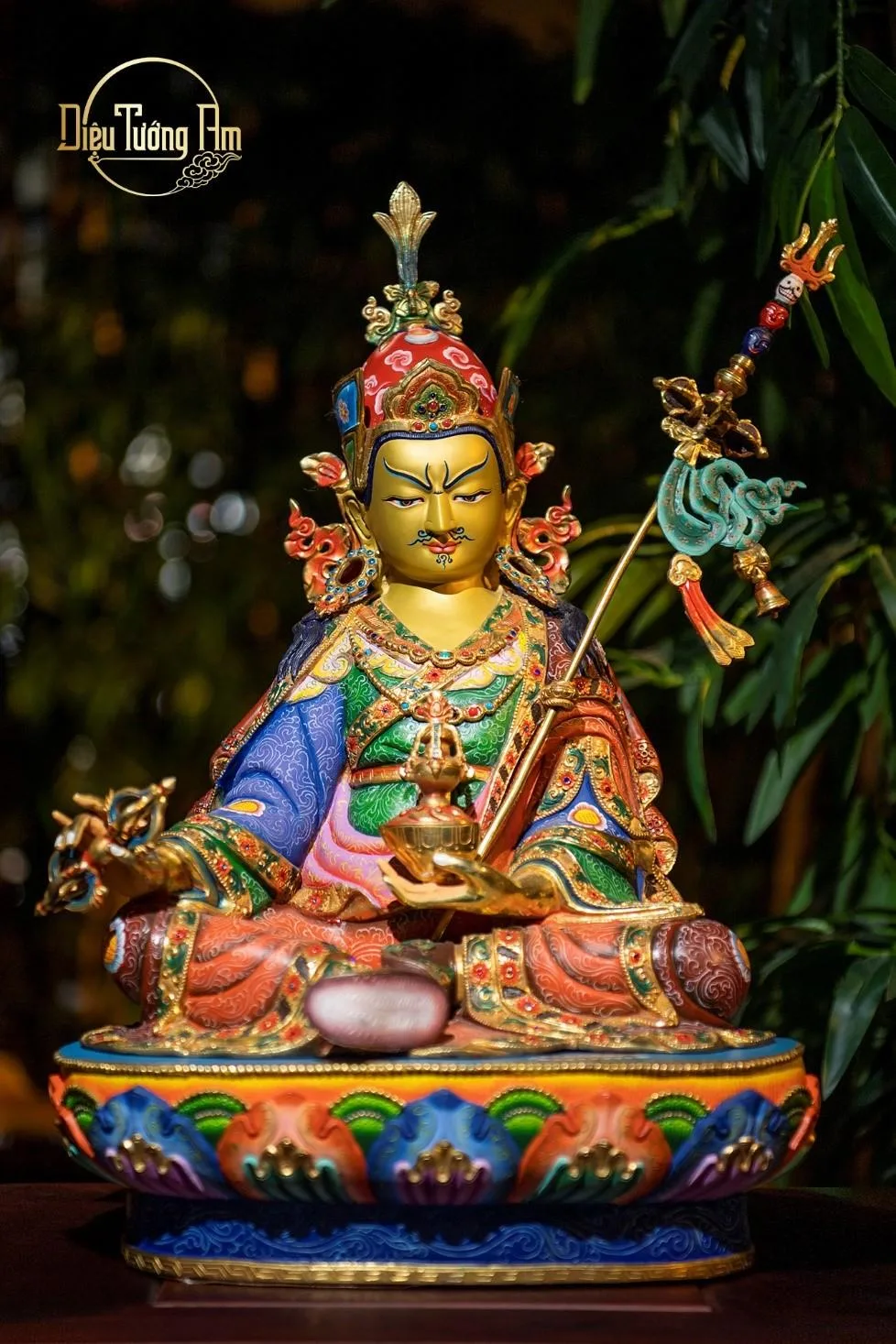
Statue of Guru Padmasambhava
Through its rich array of sacred statues, auspicious symbols, traditional Thangka paintings, Mandala diagrams, systems of sacred mantras, and vividly colorful rituals, Vajrayana Buddhist art has left behind a monumental heritage of exquisite works, holding an indispensable place within the broader legacy of Buddhist art.
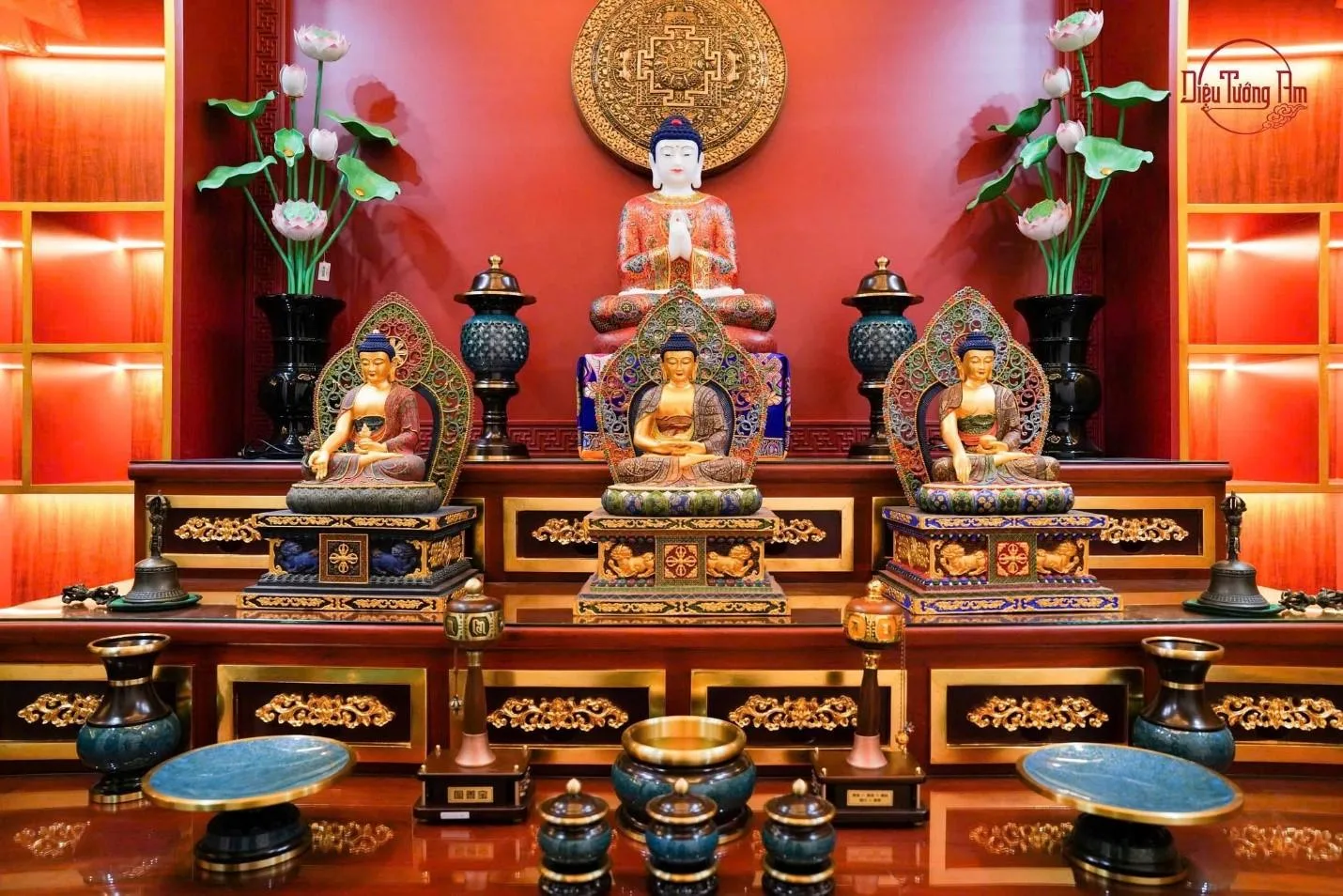
Statue of the Three Buddhas of the Three Times
The pantheon of Vajrayana Buddhist statues is remarkably vast, each bearing profound religious symbolism and a distinctive artistic style. Let us journey with Diệu Tướng Am to explore some of the most extraordinary sacred statues of Vajrayana Buddhism.
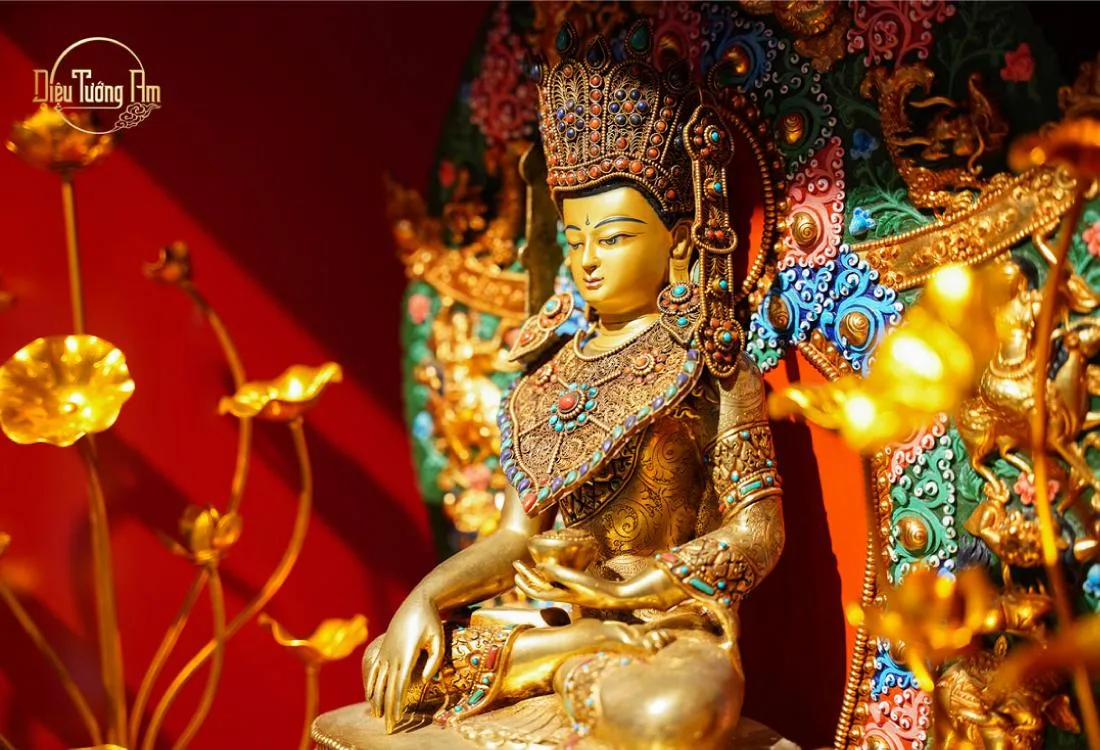
While many Buddhist traditions favor depicting the Buddhas and Bodhisattvas with gentle, simple forms and serene, radiant countenances that convey purity, harmony, and compassion, Vajrayana Buddhist statues are rendered with intricate detail, ornate adornments, and vibrant colors. The sacred forms of Vajrayana statues exude majesty and grace, with broad shoulders tapering to a slender waist, and facial expressions that are strikingly artistic and unique — at times fierce in aspect, embodying an aura of profound mystery.
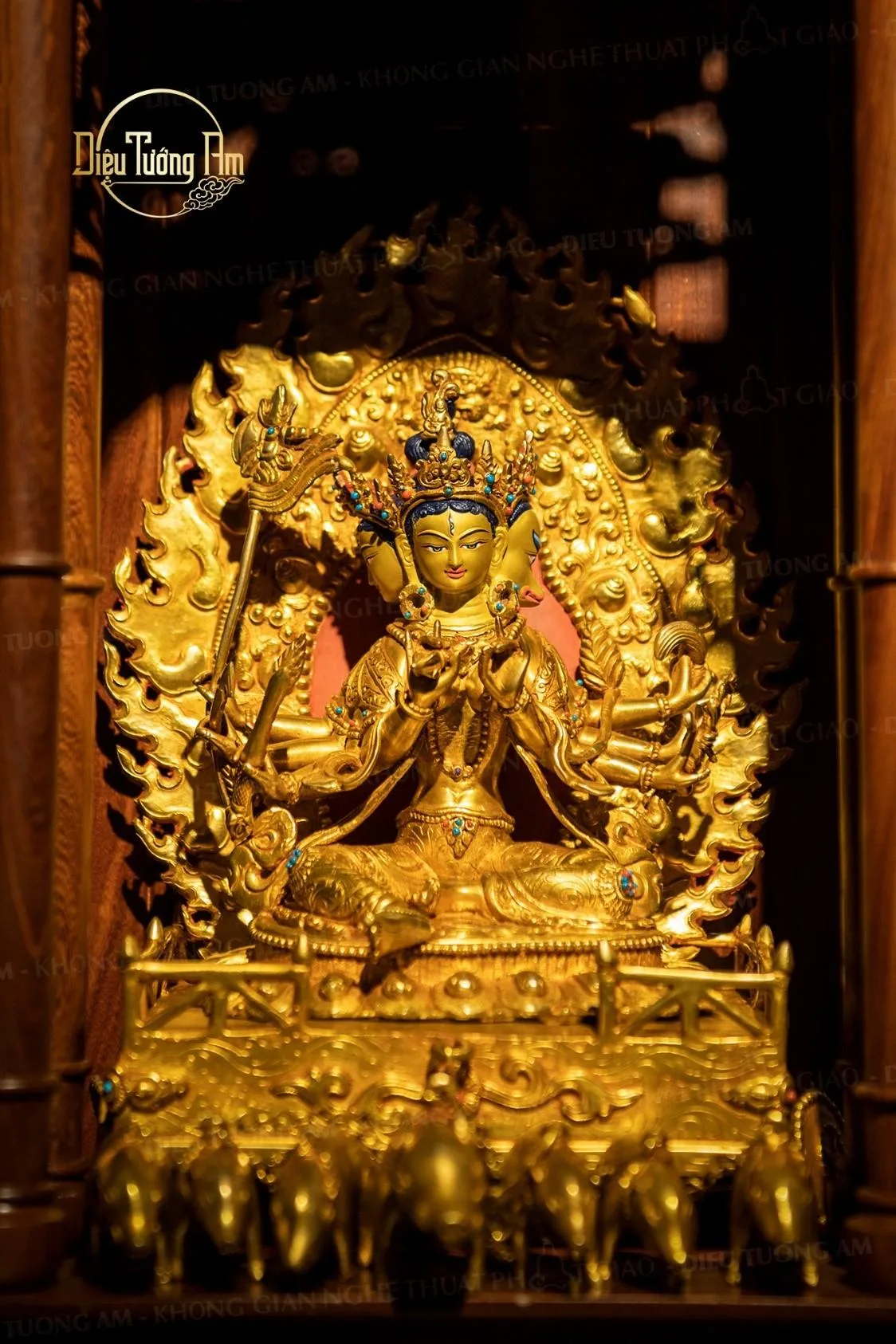
Statue of Palden Lhamo
One of the most distinctive differences lies in the depiction of Maitreya Buddha, who is not portrayed here as the plump, bare-bellied, long-eared, ever-smiling figure familiar from Mahayana Buddhism. Vajrayana scriptures instead describe Maitreya Buddha with a robust physique, his body radiant in pure gold or alabaster hue, seated upon a golden throne with legs crossed or resting upon the ground — signifying his readiness to rise and guide sentient beings toward liberation. In his right hand he holds a lotus blossom crowned with a vase, while his left hand is raised outward in the mudra of fearlessness. A stupa also appears atop his crown. Maitreya Buddha symbolizes ever-present readiness and awakening — “neither conquering nor being conquered.”
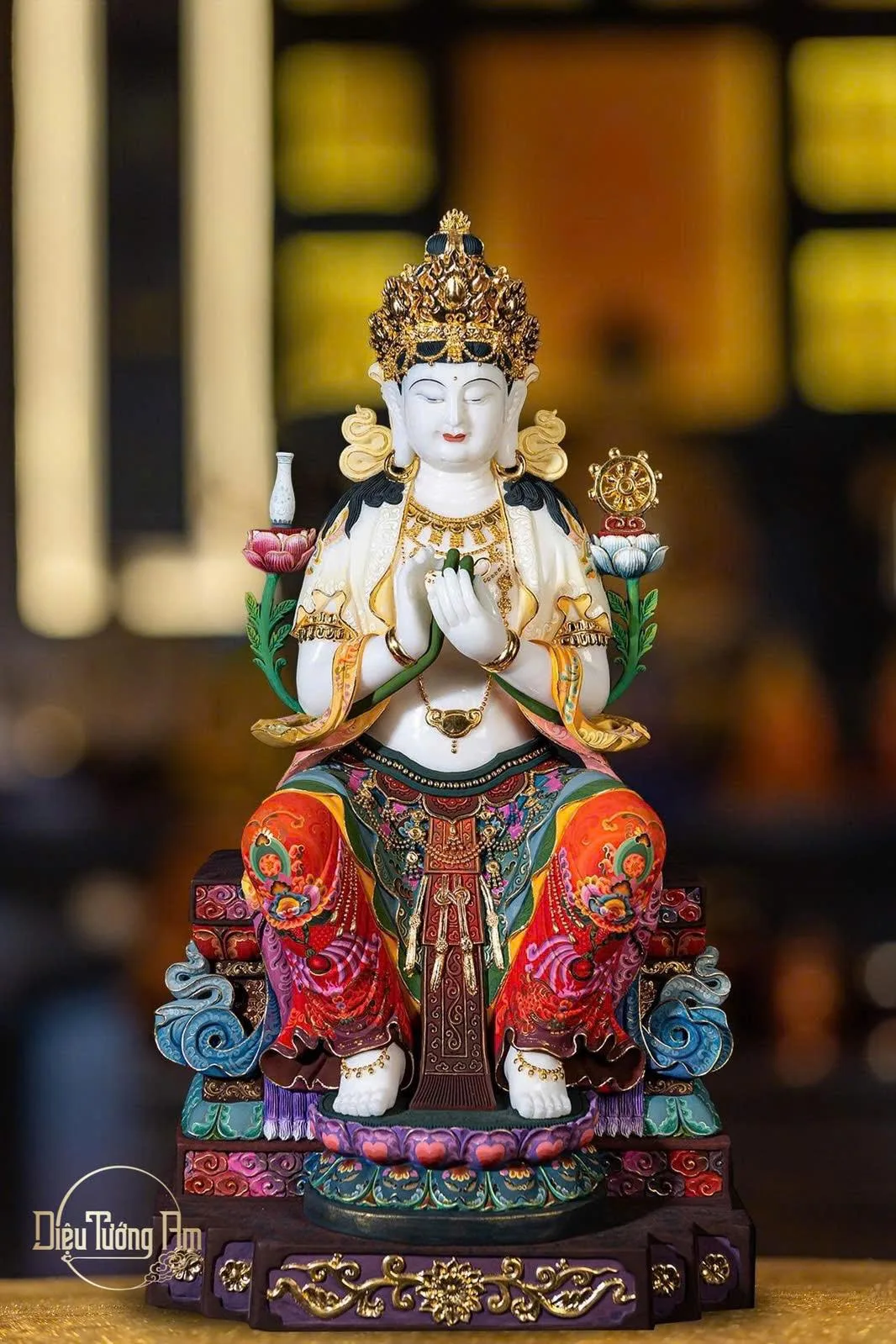
Statue of Maitreya Buddha
The incarnate form of Shakyamuni Buddha is traditionally portrayed with a serene, rounded countenance and a simple, elegant form, expressing compassion and enlightenment, with the ushnisha crowning his head. In Vajrayana Buddhism, however, his sambhogakaya — his enjoyment body — is depicted adorned with resplendent ornaments such as a crown, necklace, earrings, breastplate, and celestial garments, symbolizing the transformation of negative emotions into boundless loving-kindness, compassion, transcendent wisdom, and enlightened activity for the benefit of all sentient beings.
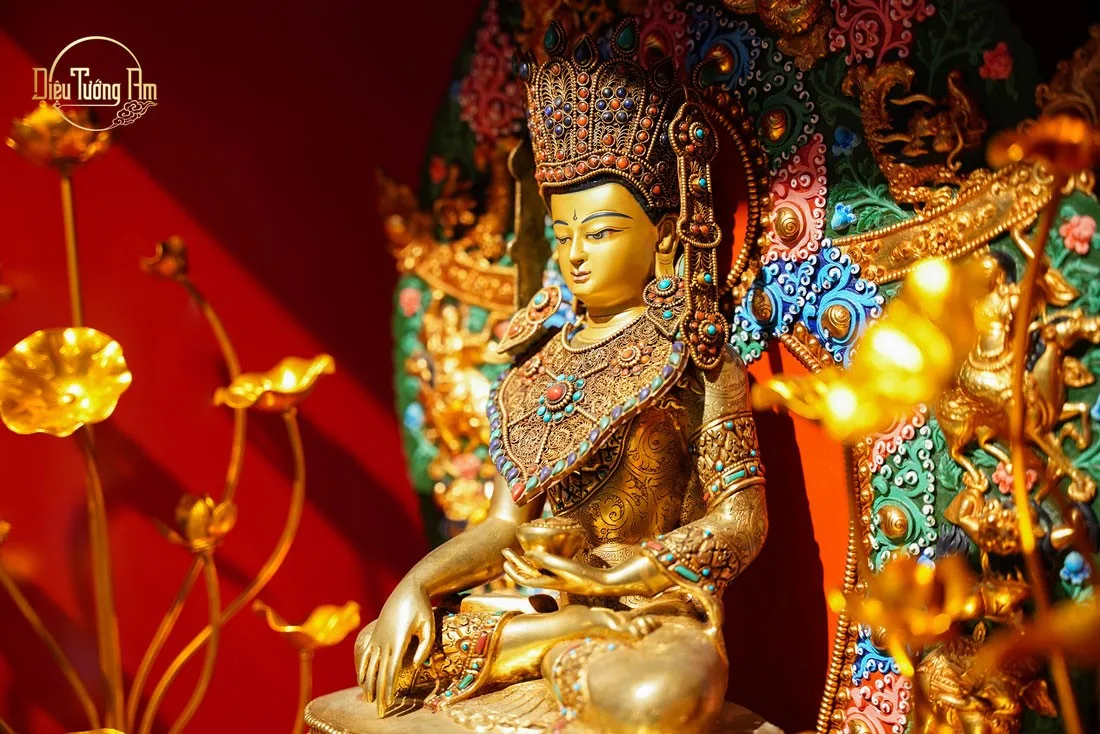
Statue of Shakyamuni Buddha in the Eight-Year-Old Form — the sambhogakaya of Shakyamuni Buddha
Though their forms may differ, the merit gained from venerating the Buddha's sacred image remains the same. The Avatamsaka Sutra states: "Among my four assemblies of disciples, there is not the slightest difference between those who make offerings directly to me now and those in future ages who make offerings to my image with sincere faith. Their merit is equal, and so are its fruits." Venerating the sacred images or statues of the Buddha is regarded as a profound act of merit-making, and those who make offerings before these sacred forms may attain supreme happiness and inconceivable blessings. Likewise, those who paint or craft the Buddha's sacred image also receive immeasurable merit.
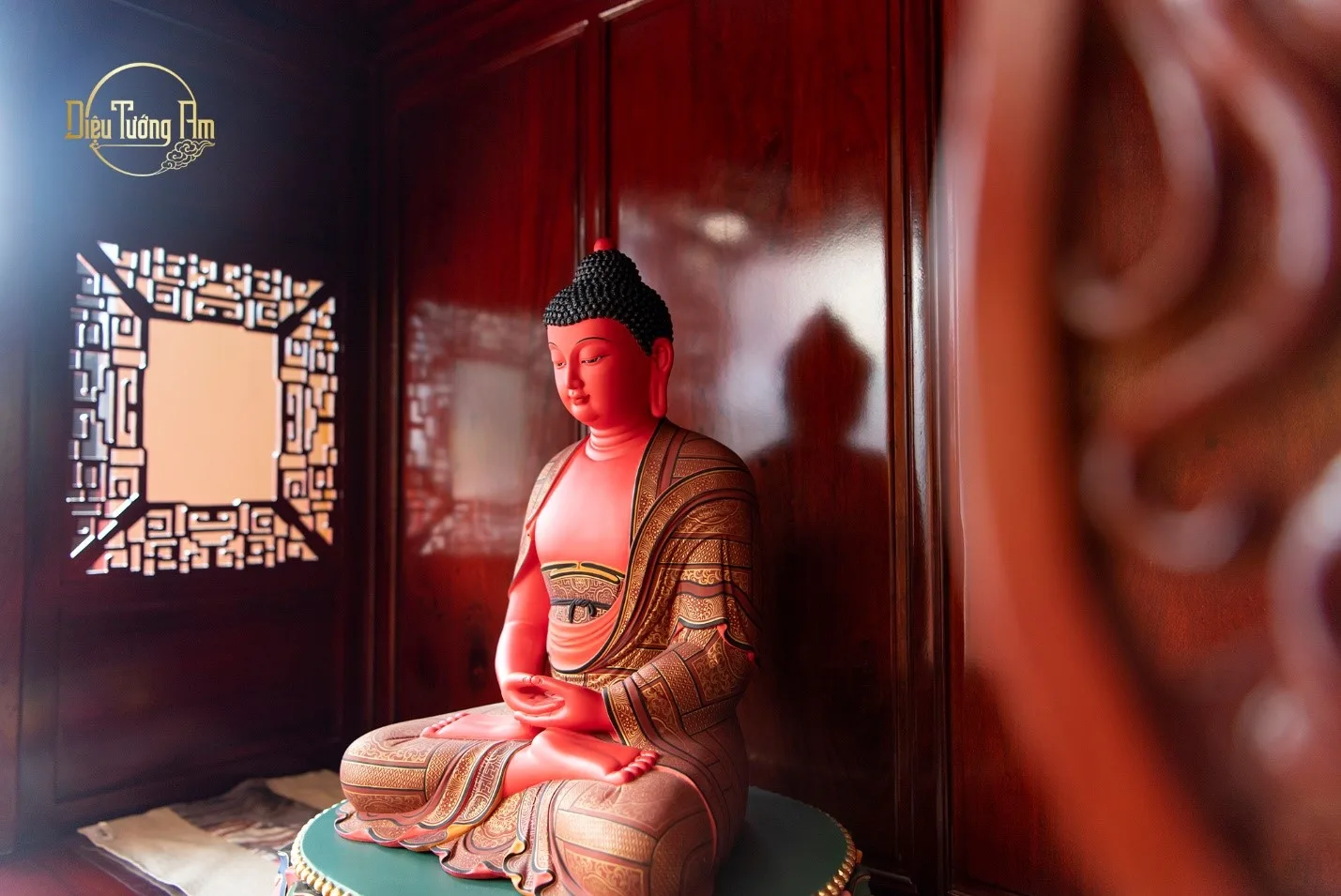
Amitayus Buddha represents the sambhogakaya of Amitabha Buddha, his body radiant in red, symbolizing Great Bliss
In Vajrayana Buddhism, the sacred forms of Avalokiteshvara are inseparably linked to the six-syllable mantra “OM MANI PADME HUNG,” and the Bodhisattva manifests in many sambhogakaya forms. Among the peaceful manifestations are the Four-Armed Avalokiteshvara, the Thousand-Armed Thousand-Eyed Avalokiteshvara, Green Tara, and White Tara.
The Four-Armed Avalokiteshvara embodies the unobstructed purity of love and wisdom, radiating boundless compassion and revealing the pristine awakened mind. With one face and four arms, he represents realization of the Four Immeasurables. His body is luminous and translucent, seated in vajra posture upon a white lotus and moon disc — symbolizing the non-duality of samsara and nirvana. His adornments of fine silk and precious jewels represent enlightened qualities, while the animal skin draped over his shoulder signifies his vow to engage fully with the world for the benefit of all beings.
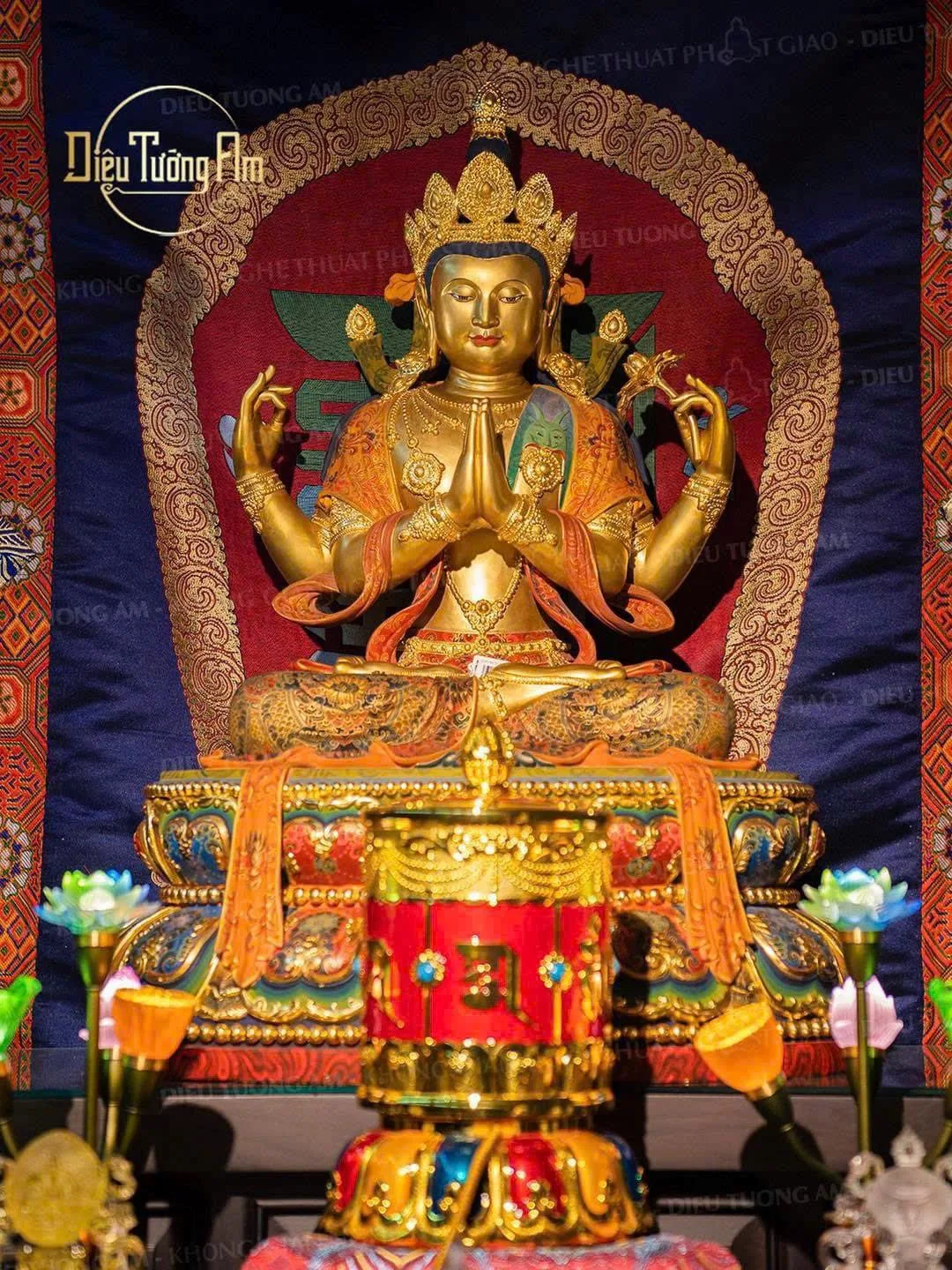
Statue of the Four-Armed Avalokiteshvara
The Thousand-Armed Thousand-Eyed Avalokiteshvara bears eleven heads, one of which appears wrathful in aspect. He embodies boundless compassion, vowing to liberate all sentient beings from ignorance and from suffering within the three lower realms. His arms are arranged in three tiers: the innermost eight arms represent the Dharmakaya, the middle forty-two arms represent the Sambhogakaya, and the outermost arms represent the Nirmanakaya. Each palm bears an eye, symbolizing wisdom. His two innermost hands hold the wish-fulfilling jewel, symbolizing the union of infinite compassion with the Buddha's transcendent wisdom.
Beyond the auspicious sacred treasures, the meticulously composed Thangka paintings with their exquisite colors and intricate patterns, the statues of Vajrayana Buddhas themselves represent the pinnacle of artistry in the mastery of color and material. It is precisely this sacred and uniquely solemn beauty that leaves a profound impression on the many guests who visit Diệu Tướng Am.
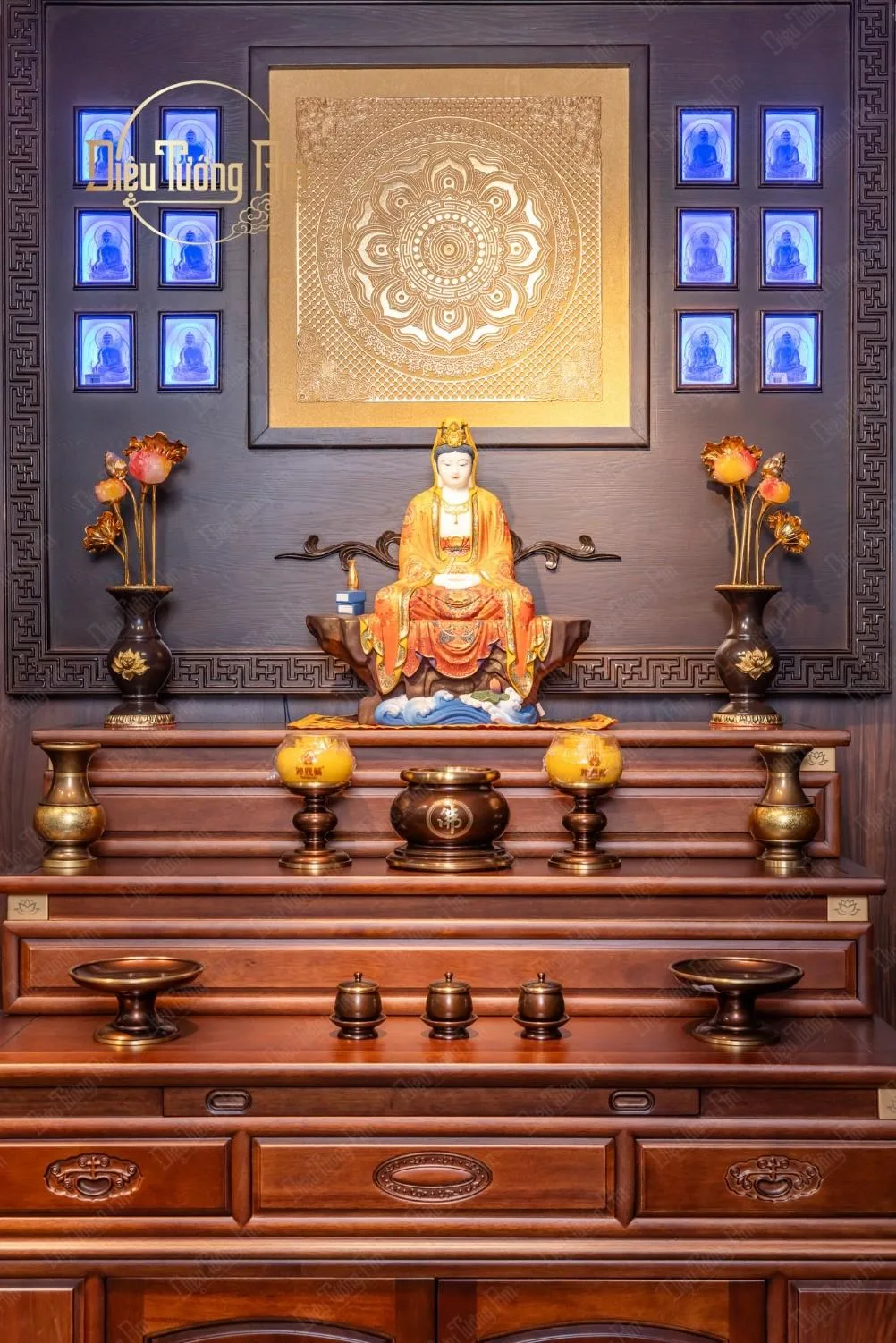
Mandala diagram
The Vajrayana Buddha statues at Diệu Tướng Am are crafted by renowned master sculptors from countries with a rich and enduring tradition of Tantric Buddhism.
We warmly invite you to visit Diệu Tướng Am and behold spaces suffused with vibrant color and countless intricate symbols and motifs of Tantric Buddhist art — an experience that brings peace of mind and draws the spirit ever closer to enlightenment.