
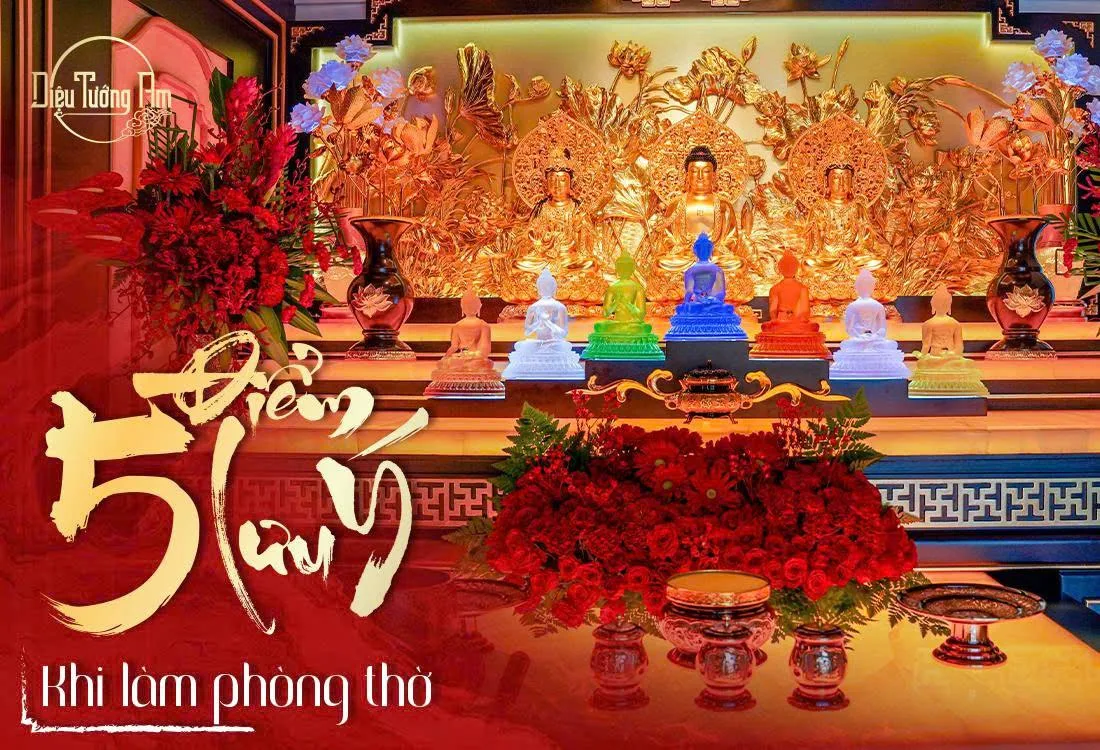
5 KEY CONSIDERATIONS WHEN CREATING A WORSHIP SPACE
A worship space is where the spiritual bond between descendants and ancestors, between the human heart and the compassionate light of the Buddhas, is nurtured. A worship space that is beautiful, dignified, and aligned with proper feng shui principles carries deep spiritual meaning while also fostering peace, blessings, and prosperity for the household.
A worship space is where the spiritual bond between descendants and ancestors, between the human heart and the compassionate light of the Buddhas, is nurtured. A worship space that is beautiful, dignified, and aligned with proper feng shui principles carries deep spiritual meaning while also fostering peace, blessings, and prosperity for the household. Therefore, when creating a worship space, special attention should be paid to the following important principles:
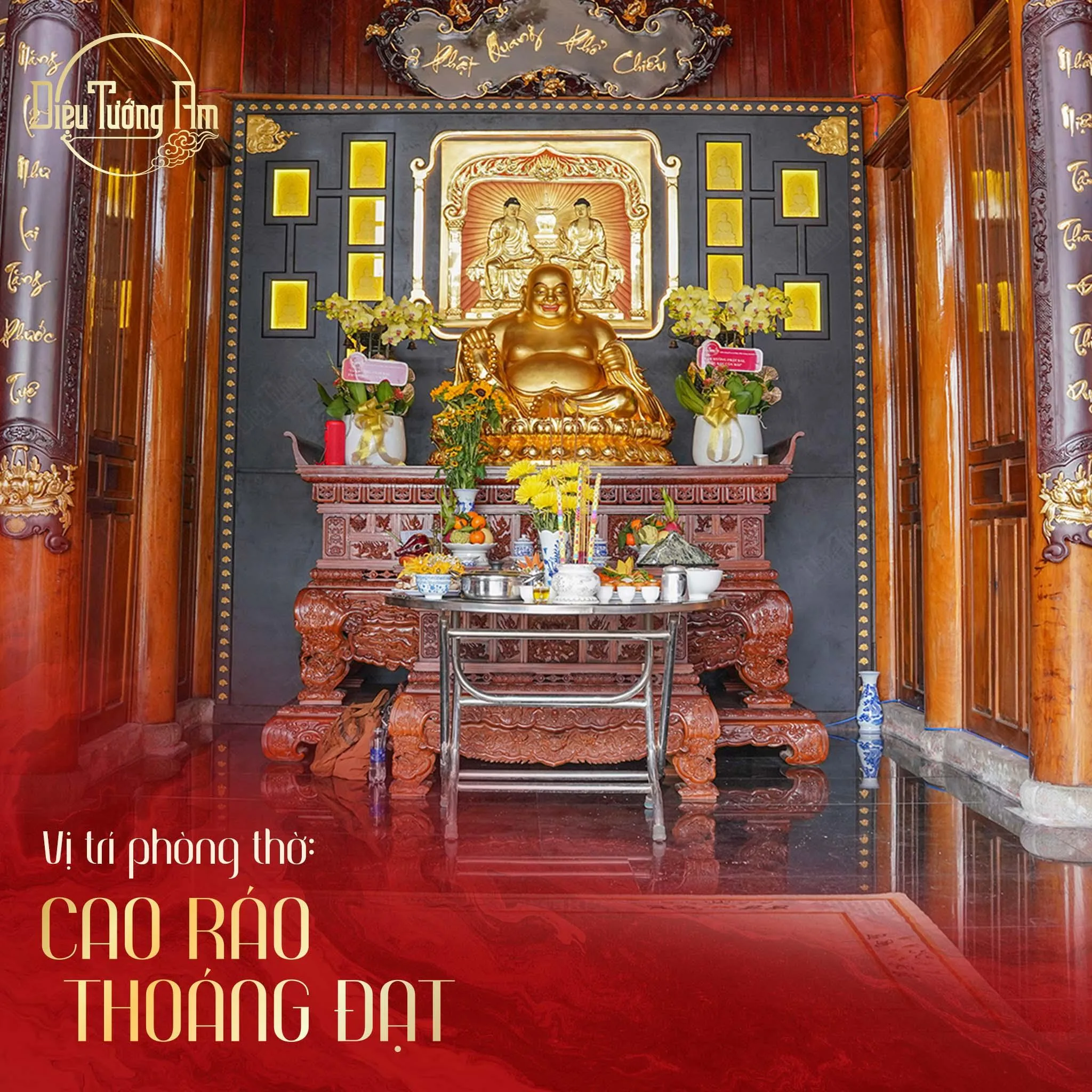
1. Location of the Worship Space – Favor Stillness Over Movement
The worship space should be placed in an elevated area with an open outlook, good energy flow, and auspicious ground, set apart from noisy living areas. Following the principle of “favoring stillness over movement,” the altar should be positioned in a quiet, pure, clean, and airy location.
2. Orientation of the Worship Space – Auspicious Position, Auspicious Direction
Choose an orientation for the worship space that suits the homeowner’s destiny, following the principle of “auspicious position, auspicious direction,” prioritizing the reception of light and favorable energy. A worship space with proper feng shui orientation helps bring peace to the family, smooth progress in work, and flourishing prosperity.

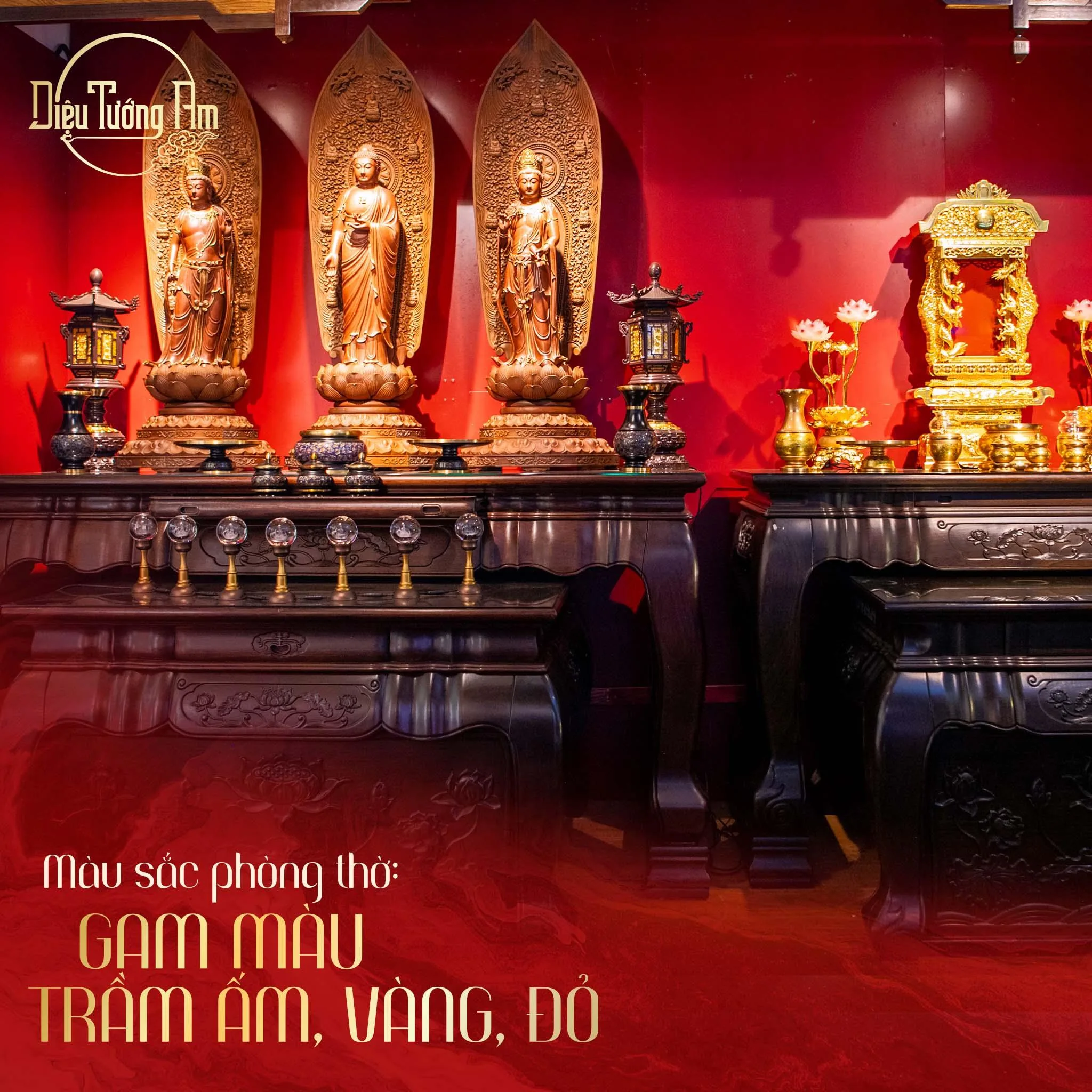
3. Color Scheme of the Worship Space
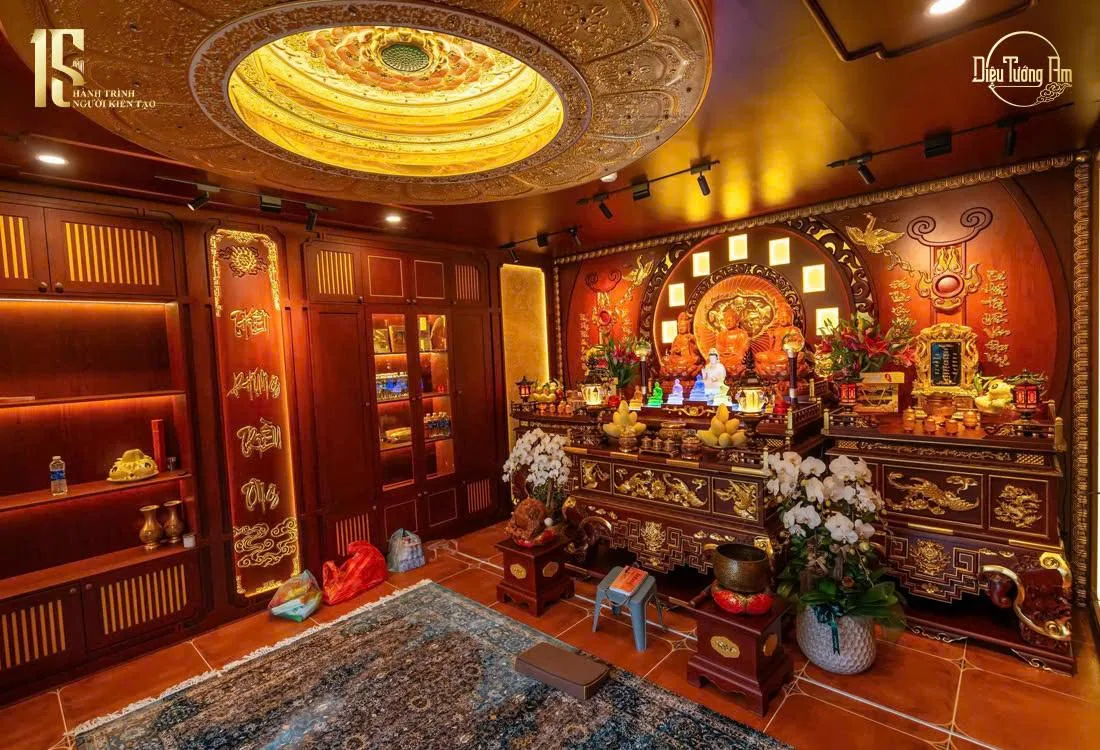
Choosing the right color scheme enhances the sacred and wondrous beauty of the worship space. Warm, deep tones such as gold, red, or natural wood hues are recommended, as they create a sense of calm while elevating the aesthetic value of the spiritual space.
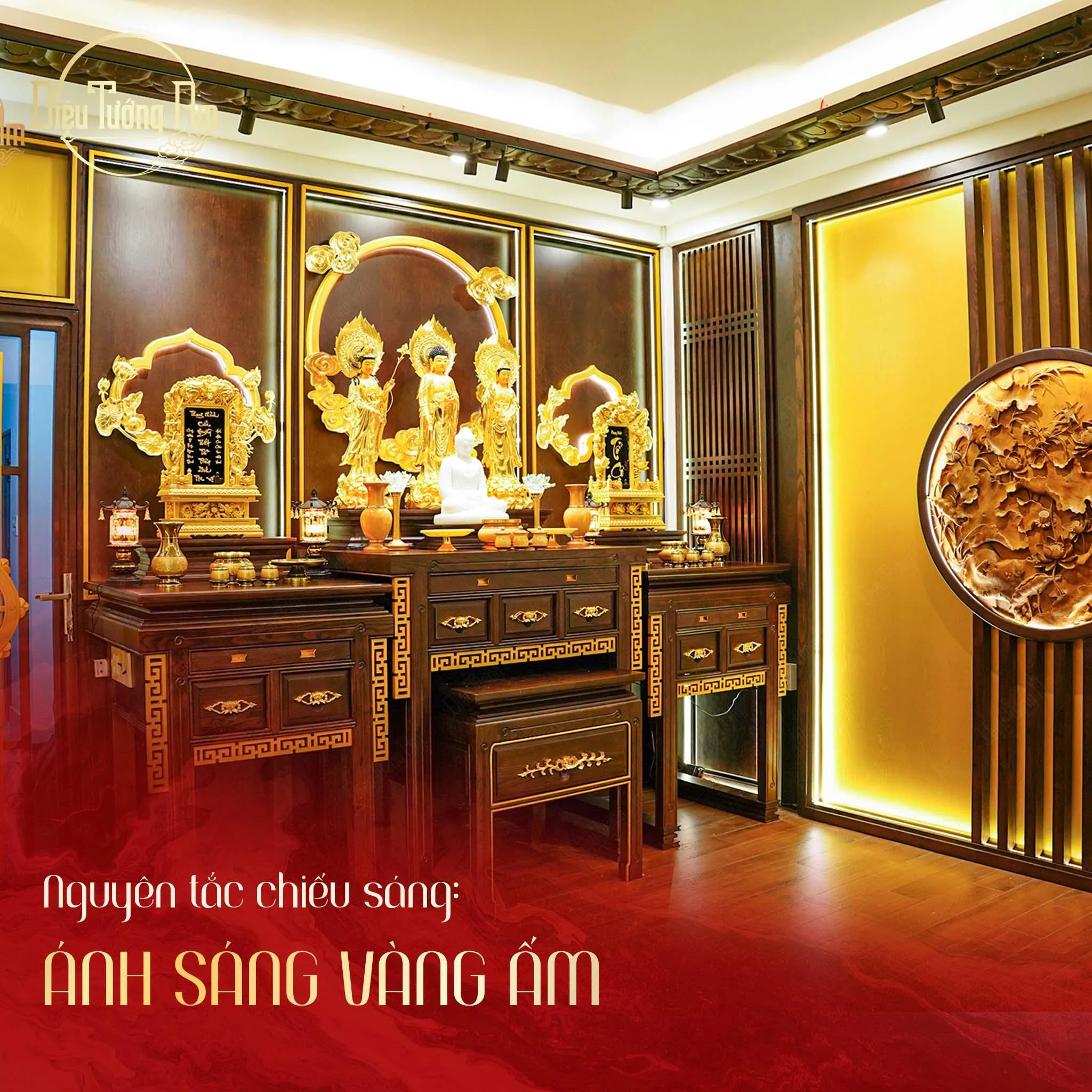
4. Lighting Principles
As a solemn and sacred space, the worship room should favor warm yellow lighting to enhance the wondrous quality of the altar and the sacred statues. Care should be taken to ensure the lighting does not shine directly onto those seated during rituals and offerings.
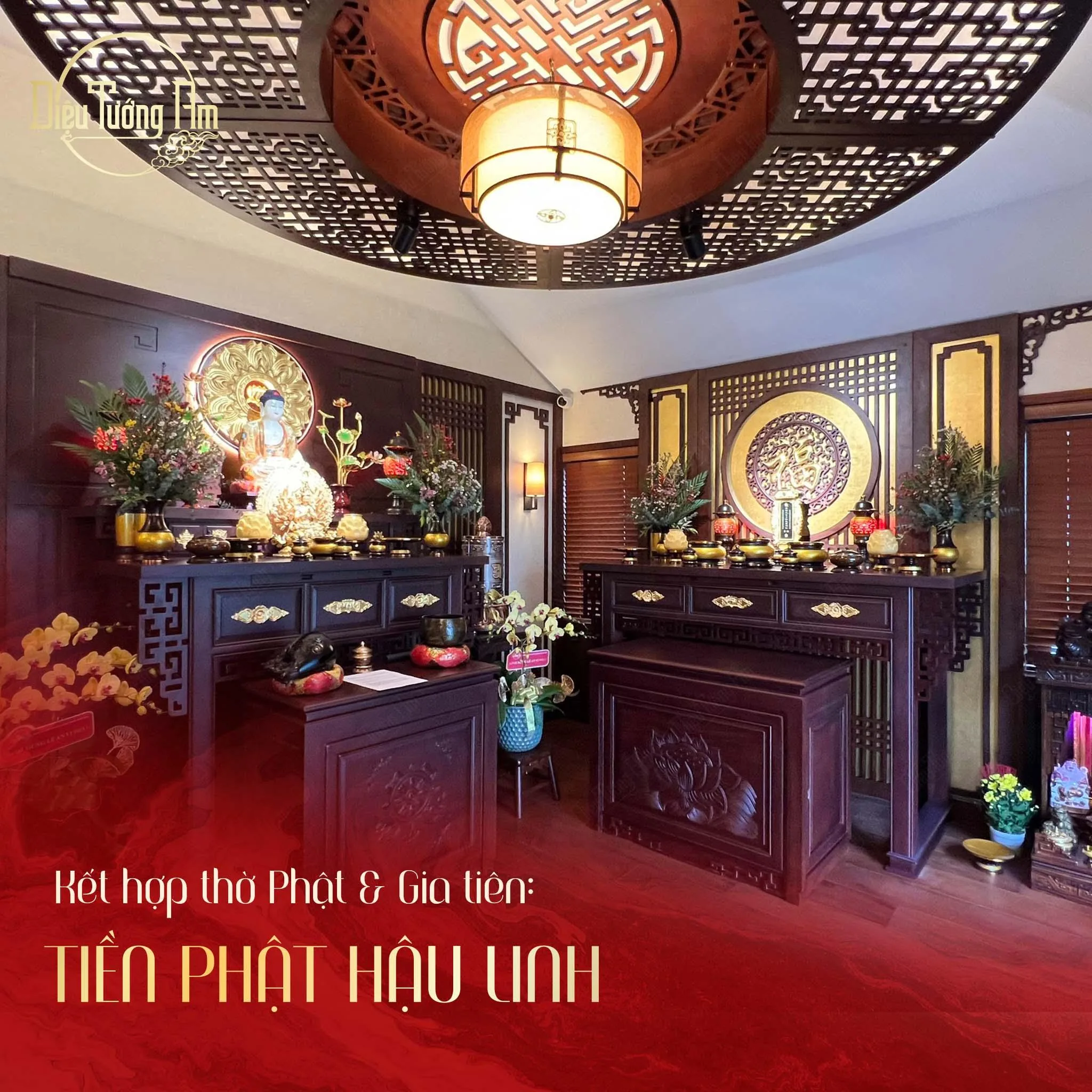
5. Arrangement of the Buddha Altar and Ancestral Altar
For worship spaces that combine the worship of Buddha and ancestors, depending on the size and aesthetics of the home, the arrangement may follow either “Buddha in front, ancestors behind” or “Buddha above, ancestors below,” with the ancestral altar always positioned lower than the Buddha altar.
A properly designed worship space—dignified and in accordance with proper ritual principles—reflects sincere reverence and brings lasting peace and blessings to the household.
With 14 years of experience in creating dignified and proper spiritual worship spaces, Diệu Tướng Am always delivers comprehensive solutions—from consultation and design to construction and installation—ensuring the values of Culture, Art, Spirituality, and Feng Shui are upheld, so that the worship space carries even greater blessings and benefits, passing on lasting value to future generations.