


11 BLESSINGS & BENEFITS OF CULTIVATING THE FOUR IMMEASURABLE MINDS
The Four Immeasurable Minds are four boundless, measureless states of mind, without limit, embracing all sentient beings. Cultivating these four immeasurable states helps one become perfected in character and live the life of a noble sage, receiving boundless merit even in this very lifetime.
1. What Are the Four Immeasurable Minds?

The Four Immeasurable Minds are four boundless, measureless states of mind, without limit, embracing all sentient beings. They are also called the "four abodes of Brahmā" (Brahmavihāra), for one who accomplishes and perfects these four states will dwell together with the Brahmā gods, living a life of lofty and pure virtue.
The Four Immeasurable Minds are: loving-kindness (mettā), compassion (karuṇā), sympathetic joy (muditā), and equanimity (upekkhā). These are the four meditation subjects for cultivating the jhānas of the Form Realm—that is, for attaining exalted states of mind that transcend sensual, material existence. In other words, these four immeasurable states cannot truly settle within the mind so long as greed, aversion, unwholesome mental factors, and the hindrances have not been stilled.
The Four Immeasurable Minds only truly arise within the heart of one who cultivates skillfully, diligently, and with unbroken meditative effort.
LOVING-KINDNESS (METTĀ)
Loving-kindness may be described as benevolence, goodwill, warmth of heart, universal love, or affection—yet no matter how we phrase it, words seem unable to capture its true essence and deepest meaning. It is often said that loving-kindness is a vast, all-embracing love that extends to nature, to people, to animals, to plants. This description comes closest to the truth. Yet may this love never be mistaken for mere attachment or infatuation; it does not require us to dwell in sentimental longing all day, nor does it mean we must "merge," "become one," or "dissolve" ourselves into all beings, or regard ourselves and other beings as literally "one."
COMPASSION (KARUṆĀ)
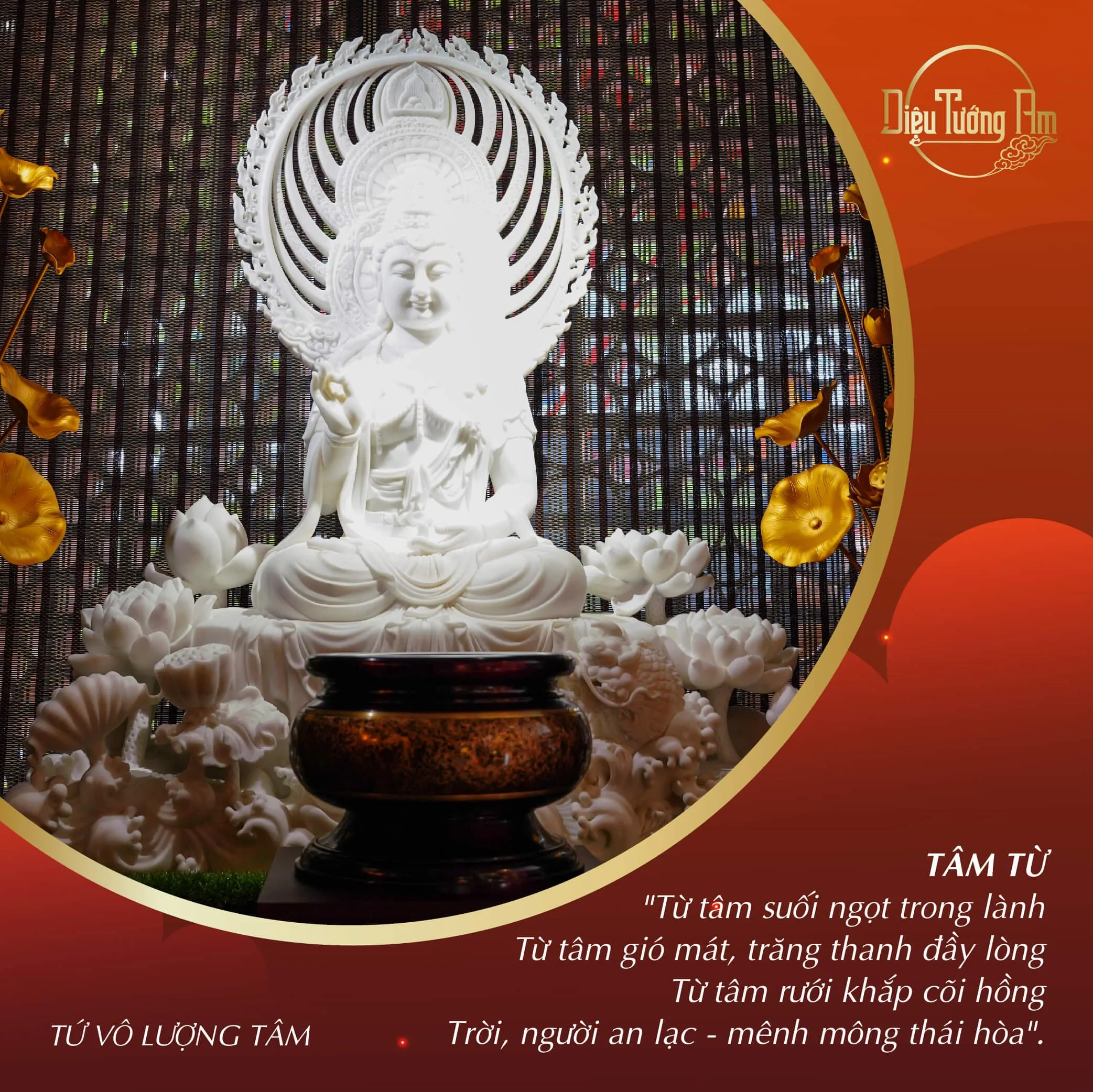
Compassion is a heart of empathy—one that is moved by the suffering and misfortune of others, that longs to soothe, share in, and console those facing hardship, adversity, sorrow, loneliness, widowhood, calamity, disability, poverty, and want. Compassion may also be defined as a noble tenderness of heart that embraces, without distinction, all suffering and unfortunate beings in the world. Indeed, if loving-kindness is a cool, gentle stream refreshing all humankind, then compassion is the heart that readily responds—not only to the suffering others endure now, but also to the consequences they will bear in the future.

SYMPATHETIC JOY (MUDITĀ)
Joy, simply put, is gladness—something everyone understands, yet surely not the coarse or worldly kind of gladness. It is a lofty, wholesome, luminous joy. It is as gentle and pure as a half-opened blossom rejoicing with a green dewdrop atop a mountain peak. It is as clear and buoyant as sunlight dancing upon a thousand leaves. It is as warm, sincere, and steadfast as moonlight falling upon the thatched roof of a sage's hermitage.
Thus, sympathetic joy is gladness—but a gladness that is light, untainted, and pure, free from the shadow of self-interest, selfishness, greed, or aversion; free from the dusty conditions and afflictions of the sensual, material world outside. The heart of sympathetic joy beats in harmony with all fortunate beings. Its clear eyes always perceive the joyful, beautiful side of life. Yet to attain boundless sympathetic joy requires the same long, sustained cultivation as loving-kindness and compassion. And indeed, such noble qualities are never given freely to the ordinary or the petty-minded. Such excellent virtues do not come easily to the foolish, the ignorant, or the lazy. These lofty states of mind are reserved for the virtuous and the wise.

EQUANIMITY (UPEKKHĀ)
The most exalted, luminous, cool, and light of the Four Immeasurable Minds is equanimity (upekkhā).
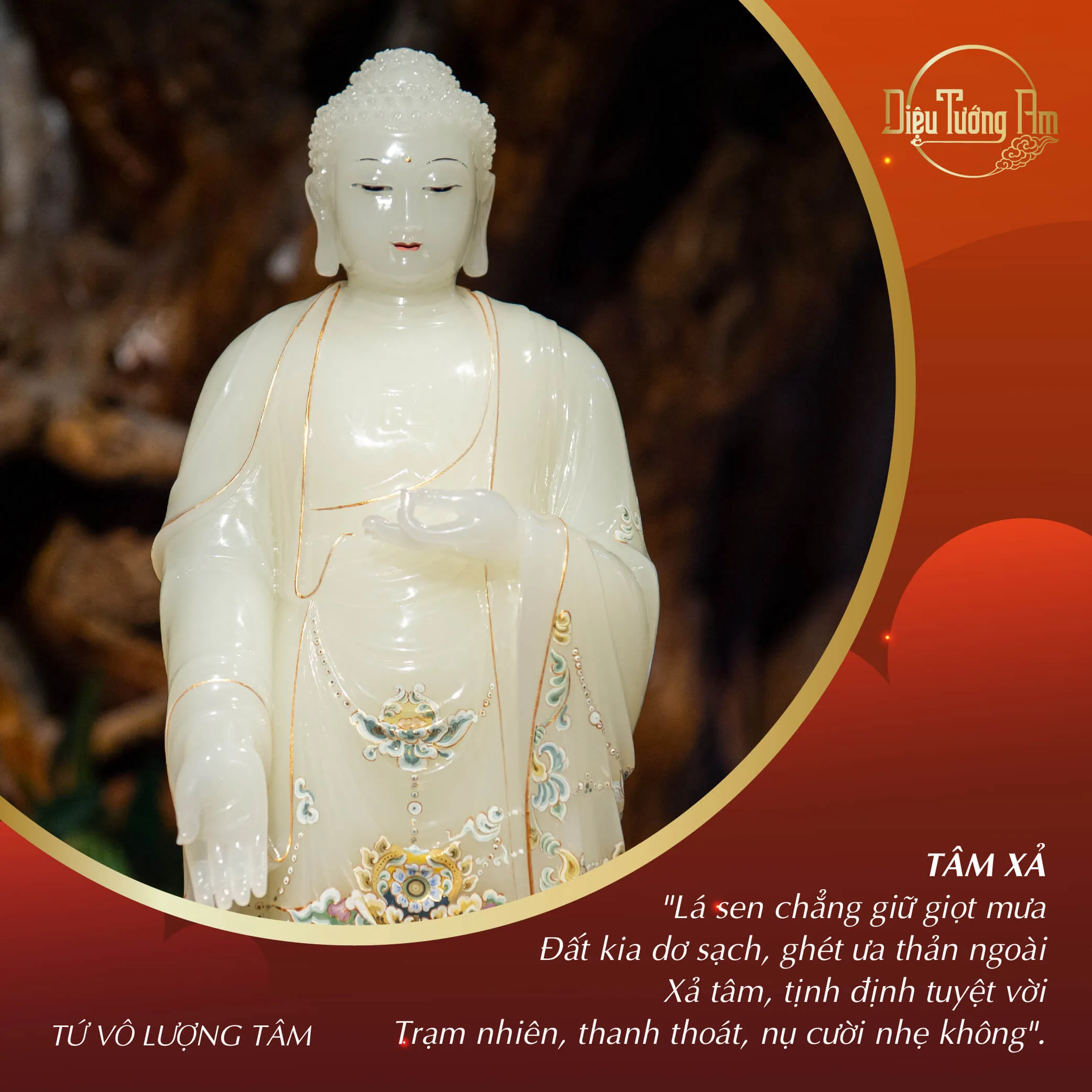
Upekkhā is formed from two roots: "upa," meaning right, impartial, balanced, and "ikkha," meaning to set one's mind, to discern, to see. Thus, upekkhā means to hold the mind in balance and impartiality—neither attached nor averse, neither pleased nor displeased—before all circumstances of life. Equanimity is like a lotus leaf, which never retains anything, but lets slip away every drop of water that falls upon it, whether clean or soiled, from wherever it comes.
Upekkhā is the mind that remains free and at ease before adversity, before slander, curses, contempt, or criticism from others. And it remains just as calm and unmoved before happiness, good fortune, praise, and admiration from others. In short, before success and failure, gain and loss, victory and defeat, praise and blame, joy and sorrow, the mind of upekkhā remains as calm and steady as the earth. It stands firm and unshaken, like a great boulder amid raging storms.
2. 11 Blessings and Benefits of Cultivating the Four Immeasurable Minds
The Buddha taught: "Bhikkhus! When the liberation of the heart through loving-kindness has been cultivated, made abundant, made a vehicle, made a basis, firmly established, consolidated, and rightly undertaken, eleven great benefits may be expected."
These eleven benefits are as follows: