Practicing Love and Self-Healing with Master Minh Niệm - Vu Lan Season 2022 Talk at Diệu Tướng Am Hanoi
Amid the joyful atmosphere of Vu Lan season, the festival of filial piety, in the Buddhist calendar year 2566, Zen master Minh Niệm, author of "Understanding the Heart" and "Living Playfully", shared precious and heartfelt reflections with fellow Buddhist practitioners at the Diệu Tướng Am Hanoi Buddhist Cultural and Art Space.
Vu Lan season returns to remind us of the debt we owe to those who gave us life and raised us — our grandparents, parents, ancestors, and the great merit of our spiritual teachers. It is also an occasion to remind us of a life of mindfulness and diligent practice along the Buddhist path. Diệu Tướng Am, together with our fellow practitioners of shared heart, felt deep joy in paying respects to and sharing this time with Master Minh Niệm in the solemn yet warm atmosphere of the Diệu Tướng Am Buddhist Art Space.
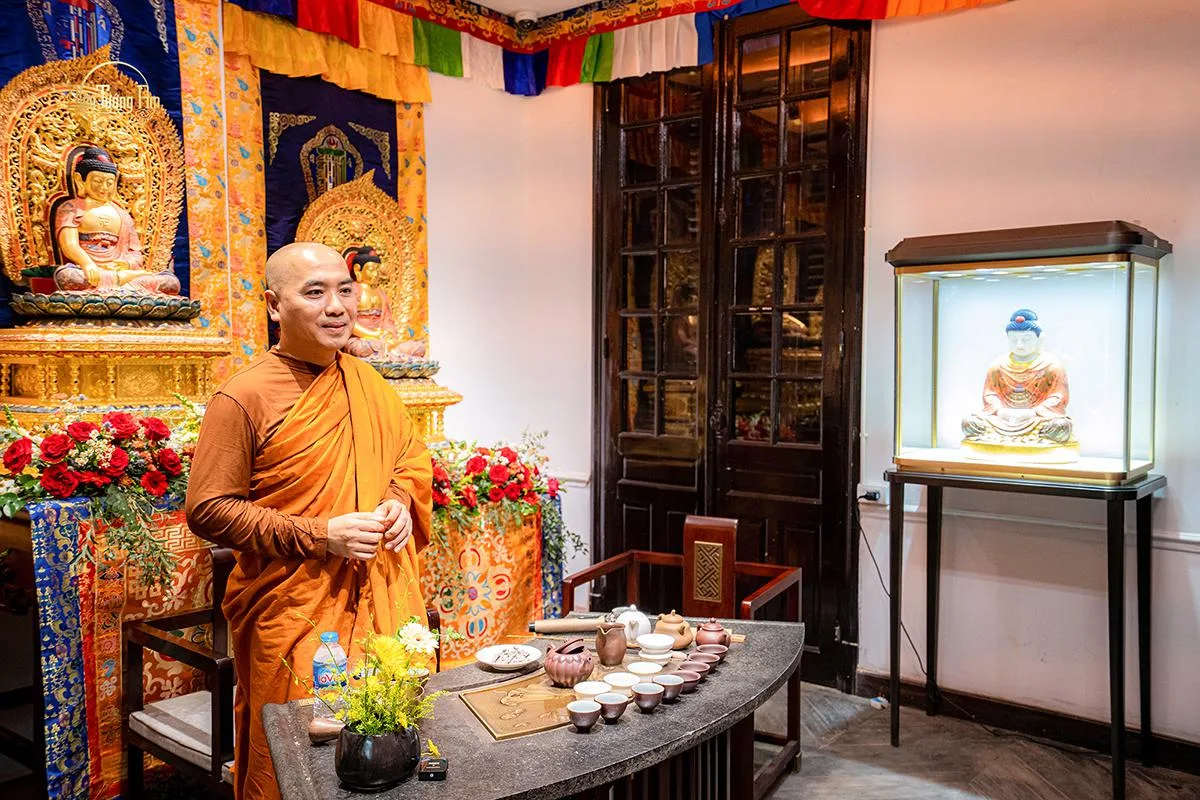
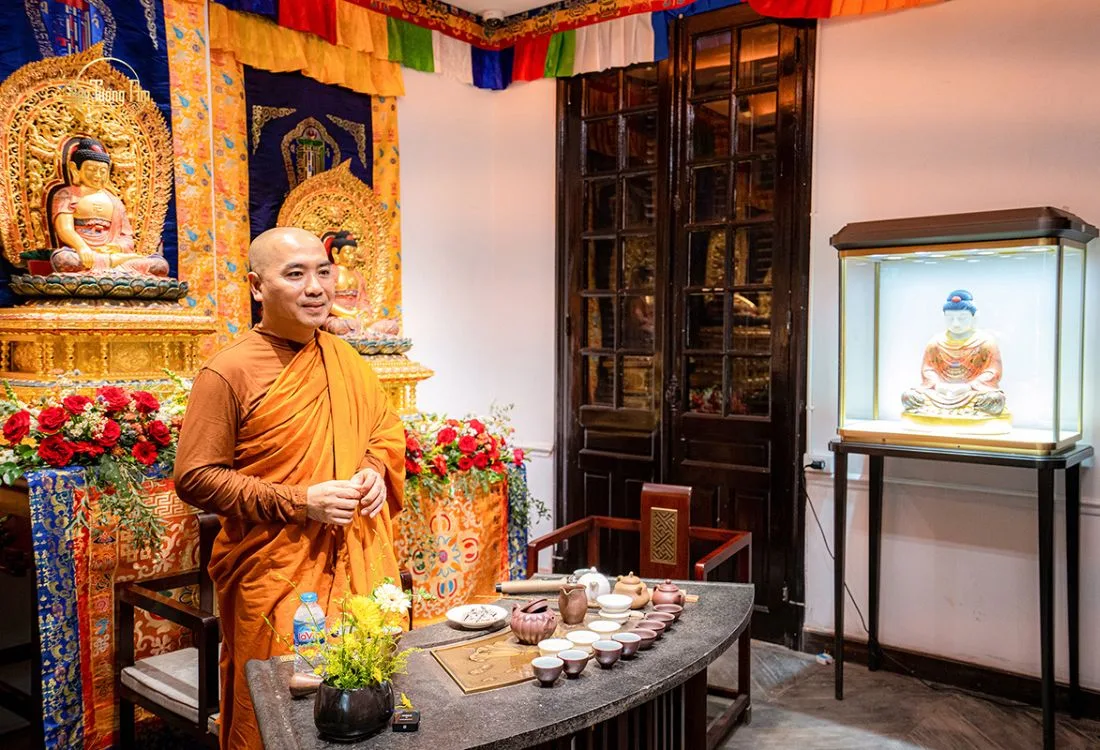
Master Minh Niệm — who has devoted much of his time to meditation practice and the study of psychological matters — points out that no matter what field we work in, we all need to set aside our own private time to practice observing and relaxing ourselves."We must heal ourselves before we can even begin to wish to heal another person. We must learn to love our own body and mind, our own home, and know how to nurture and care for it — only then can we know how to do the same for others," the master emphasized.
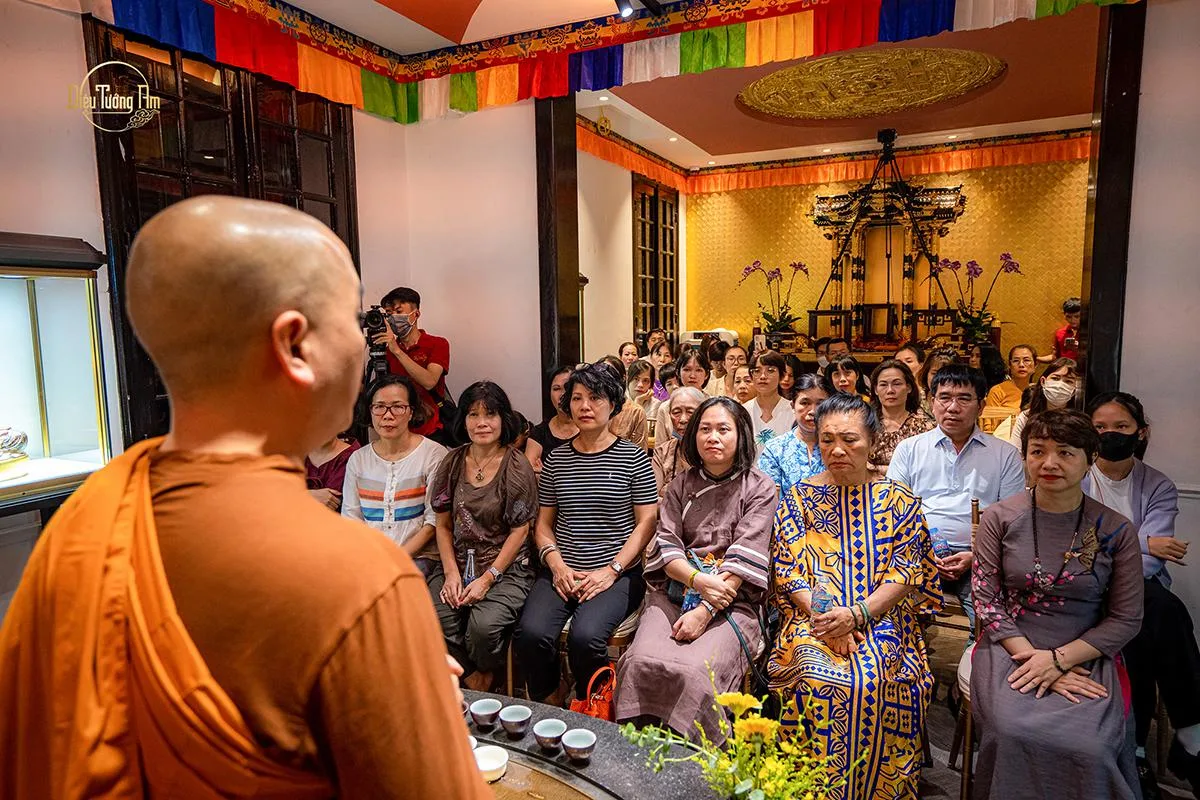
The talk shared by Master Minh Niệm with Diệu Tướng Am and our fellow practitioners of shared heart was like a precious remedy of Dharma, offering benefit to all beings.
We warmly invite you to listen to some of Master Minh Niệm's teachings, to awaken further mindfulness, and to feel happiness and peace right in this present moment. To know how to love in the right way, and to turn gratitude into right action. To know how to treat both those above us and those below us — as the master's teaching imparts, on the matter of "Loving with an understanding heart."
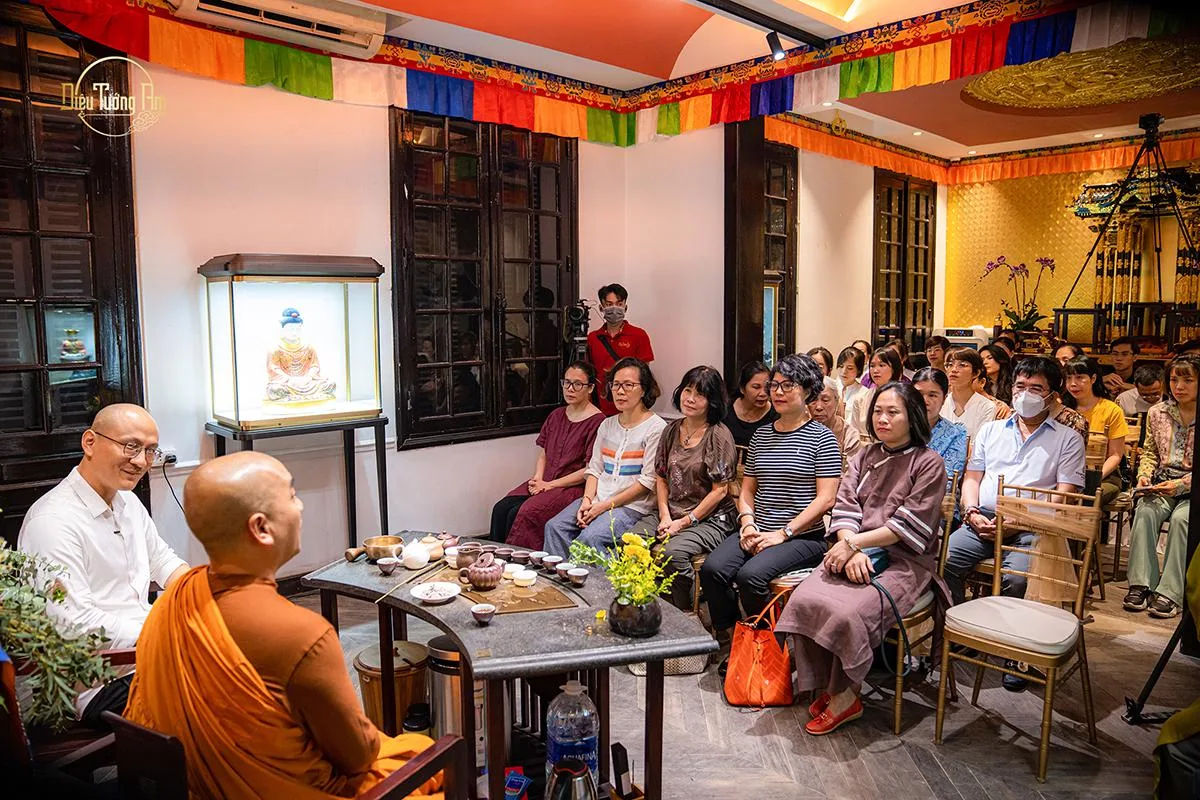
The talk drew deep interest from Buddhist practitioners near and far. However, to preserve solemnity and due to limited space, many fellow practitioners could only listen afterward to the master's words, which we have carefully recorded and are honored to pass on to you.
—
ADVERSITY IS A GIFT
Those who have once suffered psychological wounds often attract others carrying similar pain and wounds.
Regard psychological wounds — or any pain, unwanted circumstance, or obstacle on the path back to ourselves — as a gift. When we recognize and receive these things with a spirit of respect and positivity, just as we would receive a gift we truly love, it means we have drawn closer to self-healing; it means we are gradually transforming our negative energy into something more positive.
To face and see what feels wrong within ourselves as a gift, you need to learn to separate yourself from that adversity. Instead of identifying with it, treating it as though it were you, you need to gradually observe it — how it arises, how it manifests, and its desire to disturb you.
Whenever an unwholesome thought arises, don't rush to believe what you see. Stay calm, view it as something separate from yourself, and seek another direction rather than following along with where that adversity would lead. Gradually, you will no longer waste so much energy chasing after such adversity, and moreover, you will gain the ability to regulate your own behavior. This is what it means to live mindfully.
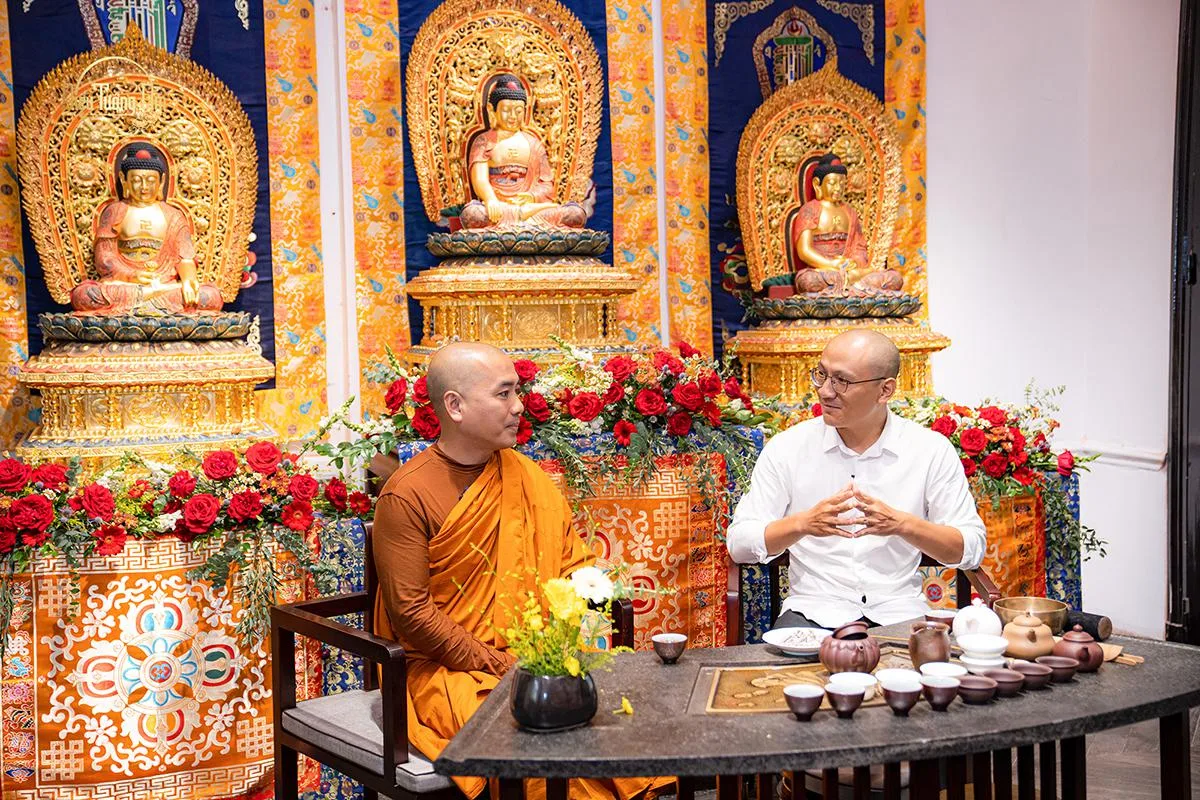
Journalist Phan Đăng in conversation with Master Thích Minh Niệm at Diệu Tướng Am Hanoi
WOUNDED CHILDREN
A person who has suffered psychological wounds most often traces this back to a childhood wounded by the very behavior of their family, of those closest and dearest to them.
We need to understand that every child born into this world carries, to some degree, the genetic inheritance of their parents. This may be a dominant gene carrying good qualities, or it may be a recessive gene carrying the worst traits of the father or mother, or of ancestors on either side of the family.
Such a child, in the earliest stage of life, may display many difficulties, sometimes even wounds of the soul. Above all, we need to understand that a child carrying such difficult traits in their character is a child deeply deserving of our compassion.
Every parent needs to clearly understand that a child is not born to serve the "wants" of their parents, or to set their parents' minds at ease. Every being that comes into this life has its own life to live, and as Buddhist teaching holds, each person carries their own distinct causes and conditions — their own karma, unique to them.
What we see in a child is, in truth, only a very small part of who they really are. Therefore, what parents need to do is not force their children to follow rules the parents believe to be right, or compel them to act according to the parents' own wishes, but rather understand that children need us to help them live in the best possible environment, so that they may develop in the most favorable way.
Another reality shows that stubborn children, who do not easily obey adults, are often children with strong personalities who develop quickly and achieve far greater success than children who simply obey. Children who are "good" and obedient often reveal a weaker character as adults and find it harder to overcome obstacles on their own.
Thus, when parents insist that their children must become a "good, obedient child" no matter what, denying their strong qualities and good character, they may unintentionally create deep wounds that follow the child into adulthood.
It is certain that parents themselves have also, to some degree, suffered psychological wounds — whether great or small — from their own family members. So, parents need to ask themselves what they must do to help their child, rather than what they must do to force their child to follow their wishes. You see, a disobedient child is a child with a psychological difficulty — one who cannot yet regulate themselves and who needs their parents' help.
Help your child find greater calm, rather than responding with denial and punishment — this is how you heal your child, and at the same time heal the wounds of your own childhood, and learn patience with yourself.
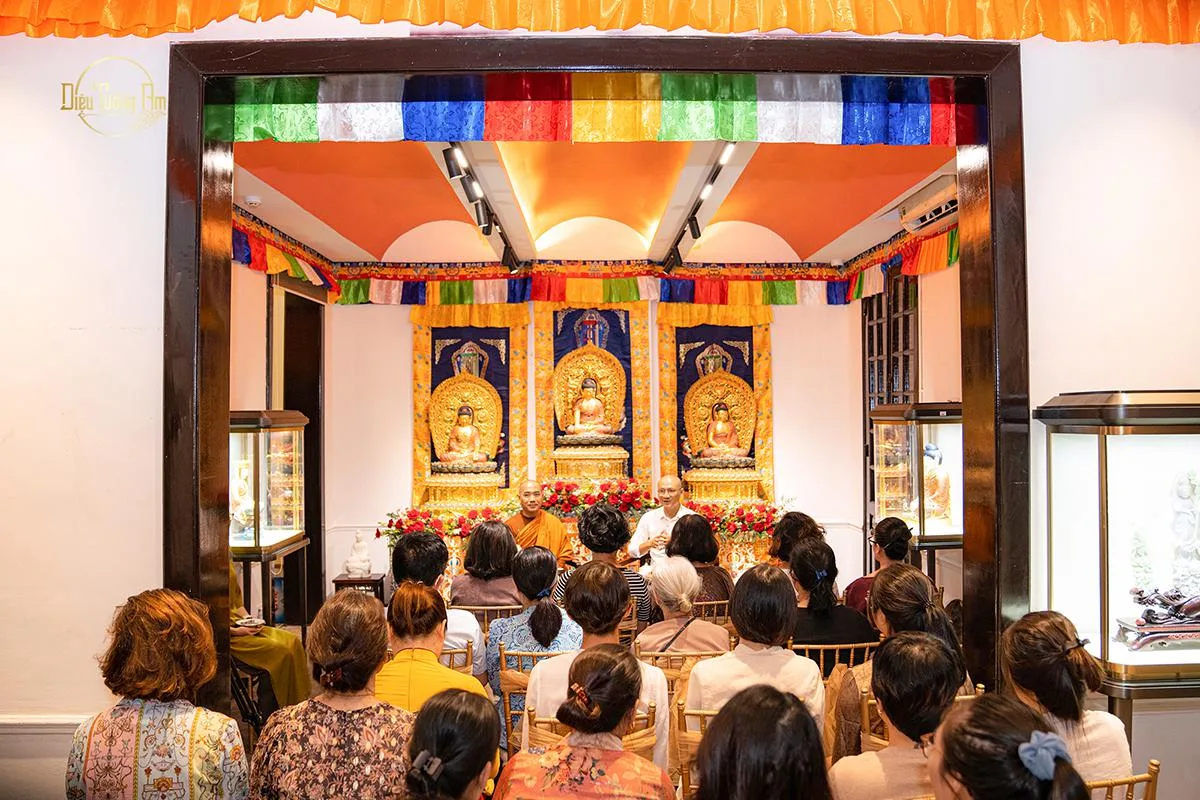
A warm and intimate sharing session at Diệu Tướng Am Hanoi

The Diệu Tướng Am Hanoi team, together with fellow Buddhist practitioners, joyfully take a commemorative photo with Master Minh Niệm