
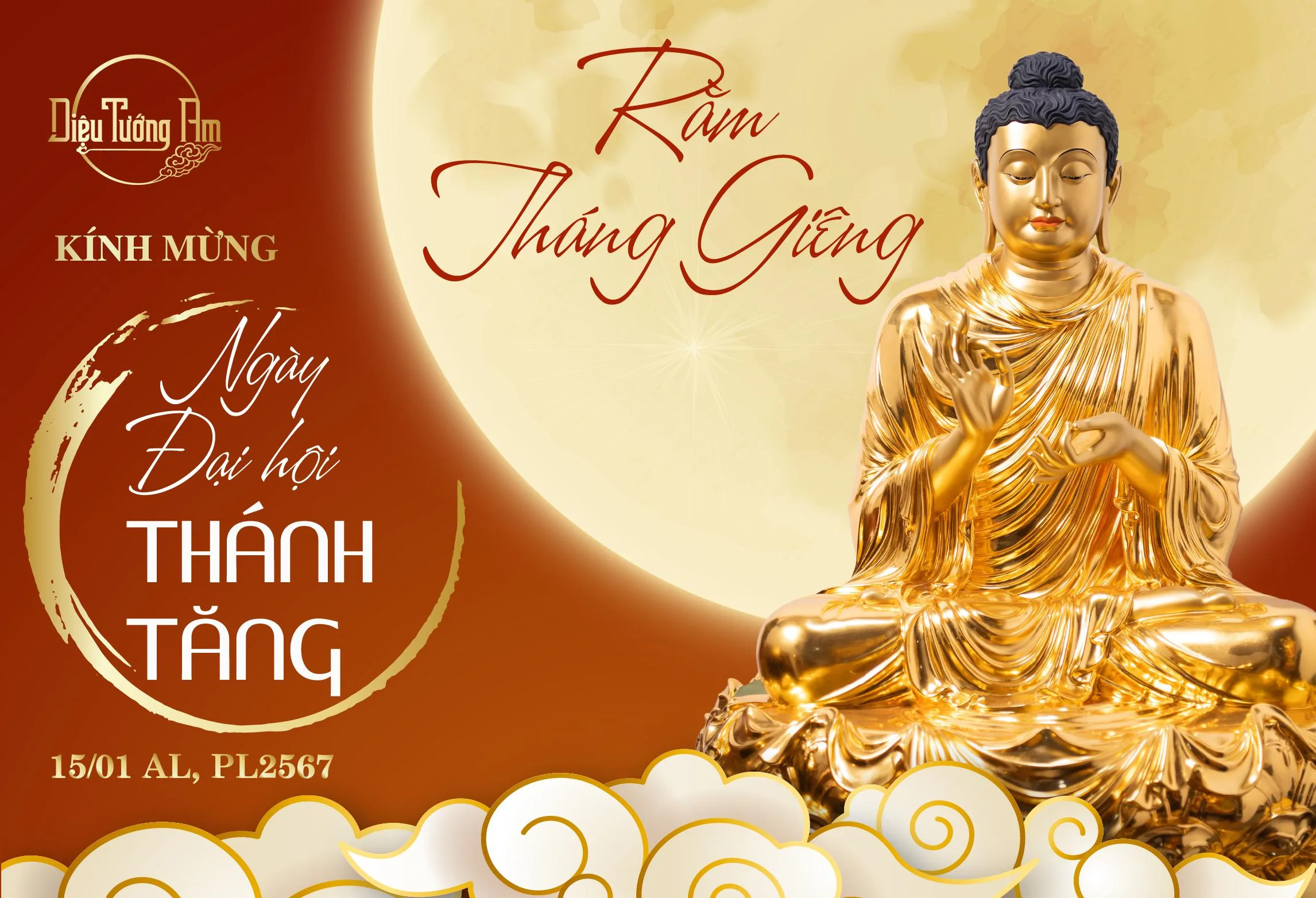
FULL MOON OF THE FIRST LUNAR MONTH - IN CELEBRATION OF THE SANGHA ASSEMBLY DAY, 15th DAY OF THE 1ST LUNAR MONTH, BUDDHIST ERA 2567
In celebration of the Sangha Assembly Day, 15th day of the 1st lunar month, Buddhist Era 2567, Diệu Tướng Am respectfully wishes all Venerable Monks and Nuns, and all devoted Buddhists, perfect virtue and a lifetime of peace.
The full moon of the first lunar month,
The Nguyên Tiêu festival, recorded since ancient times,
Radiant light dyed with compassion,
The Sangha Assembly — a boundless karmic affinity.
In celebration of the Sangha Assembly Day, 15th day of the 1st lunar month, Buddhist Era 2567, Diệu Tướng Am respectfully wishes all Venerable Monks and Nuns, and all devoted Buddhists: Perfect virtue and a lifetime of peace."
The full moon of the first lunar month, also known as the Nguyên Tiêu Festival or the Thượng Nguyên Festival, marks the first full moon of the new year. It is such an important occasion that our ancestors used to say: "Worshipping the Buddha all year round cannot compare to the full moon of the first lunar month." On this day, families traditionally prepare an offering tray to honor the occasion. Depending on each family's circumstances and customs, the offerings may vary, but all are made with sincere devotion and gratitude toward the Buddha, the Saints, and one's ancestors, in the hope of a peaceful, fortunate year ahead. According to Theravāda Buddhist tradition, the full moon of the first lunar month also corresponds to the full moon of the month of Magha, commemorating the Great Sangha Assembly. During the Buddha's lifetime, 1,250 Bhikkhus, without prior arrangement, gathered spontaneously to pay homage to Him at Veluvana Monastery on the full moon day of Magha according to the Indian calendar (corresponding to the 15th day of the first lunar month). All these Bhikkhus were Arahant Saints. On this occasion, the Buddha delivered the Ovada-Patimokkha verse, the fundamental precepts and liberating teaching for monastics. Hence, the full moon of the first lunar month is regarded as the anniversary of the Great Sangha Assembly at Veluvana Monastery.
On this day, the Sangha and lay Buddhists in countries following the Theravāda tradition hold grand commemorative ceremonies with various rites, such as offering alms to the Sangha, precept-taking ceremonies, Dharma talks, and circumambulation of the Buddha; in particular, the Dhutanga observance, during which devotees come to the temple to vow to keep the Eight Precepts for a day and a night, meditate, listen to the Dharma, and engage in spiritual discussion. In Thailand, the Sangha Assembly Day is a national holiday, allowing the whole population time off. This gives Buddhists the opportunity to visit temples and take part in study programs and festivities. Besides the rites mentioned above, Thai Buddhists also hold candlelight prayer ceremonies on the full moon night of Magha throughout the kingdom. Given the sacred significance of this full moon day, in order to make the celebration more meaningful and to invite good fortune, peace, and happiness for the new year, people are encouraged to perform the following meritorious deeds on this day:
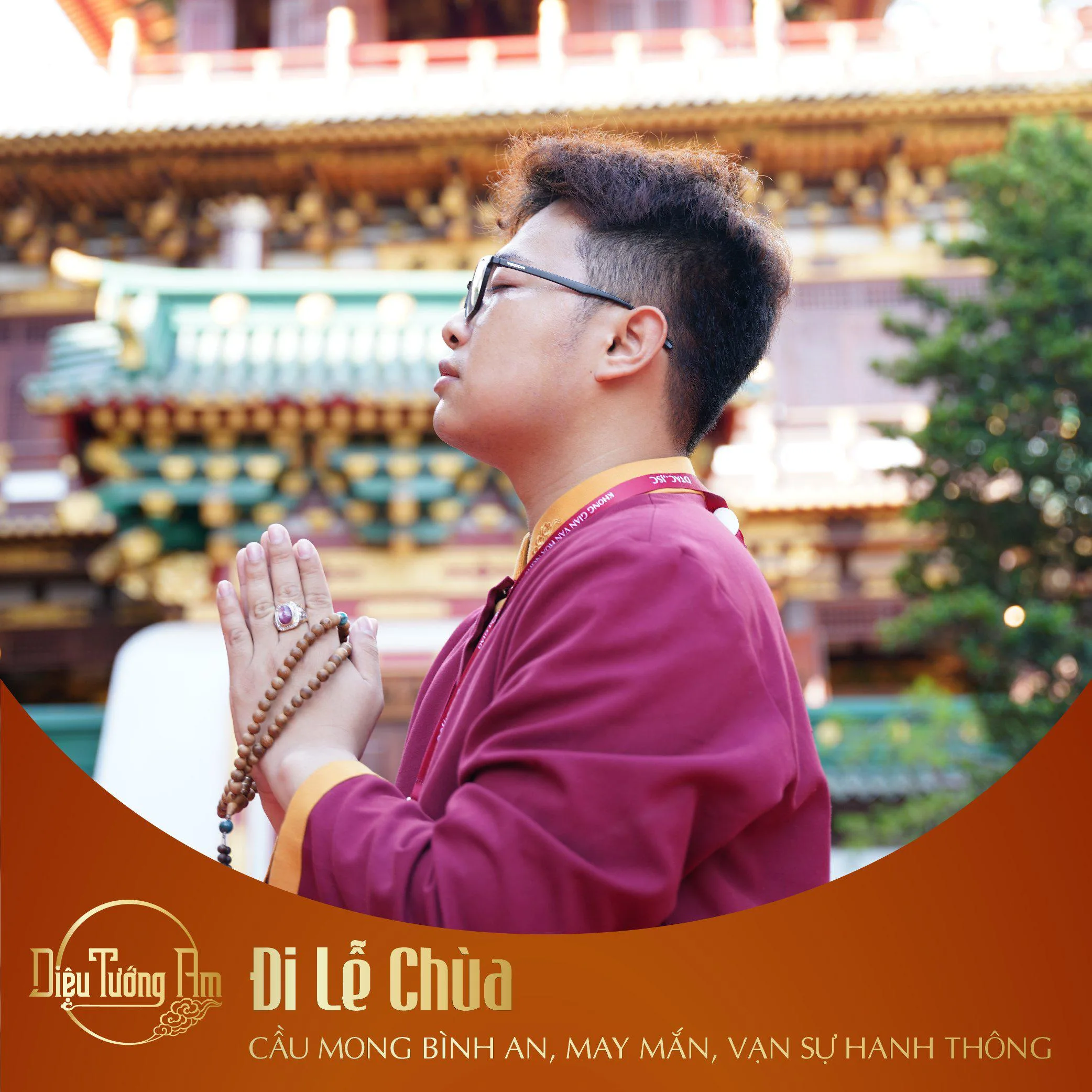
Visiting the temple to pray for peace, good fortune, and smooth passage in all endeavors
- Visiting the temple: Coming to the temple to worship the Buddha, pray, practice, and make offerings on the full moon of the first lunar month, in the hope of a peaceful, fortunate, and healthy new year, with smooth progress in all endeavors throughout the year. When visiting the temple, one should only offer incense, flowers, fruit, and vegetarian food to the Triple Gem. Visitors should also dress modestly and respectfully.
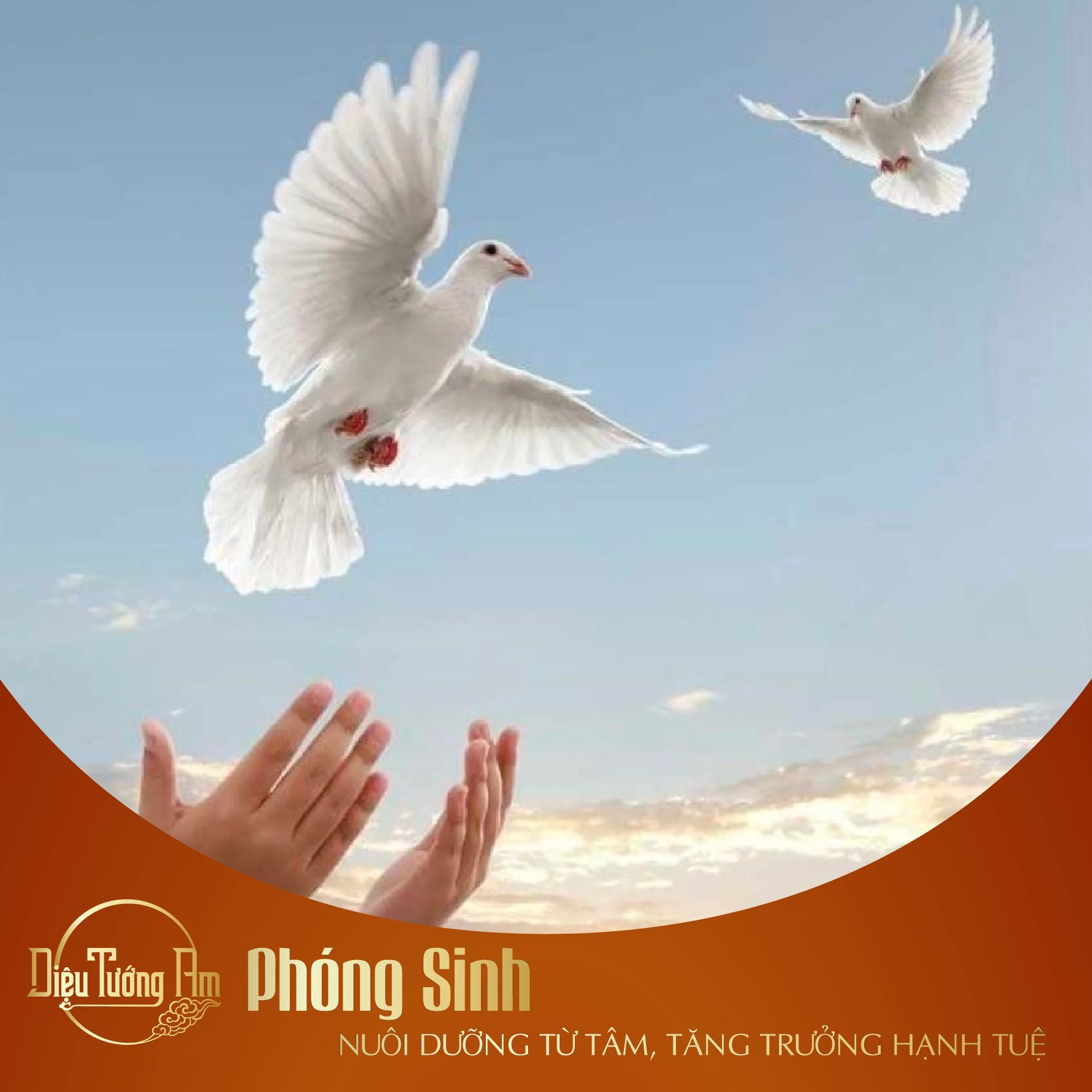
Releasing captive animals nurtures compassion and cultivates wisdom
- Observing a vegetarian diet, releasing captive animals, and performing good deeds: Eating vegetarian food and releasing captive animals are ways of practicing compassion and contributing to environmental protection. Performing good deeds not only helps those less fortunate but also brings peace of mind to the giver. In this way, life becomes imbued with greater goodness and meaning.
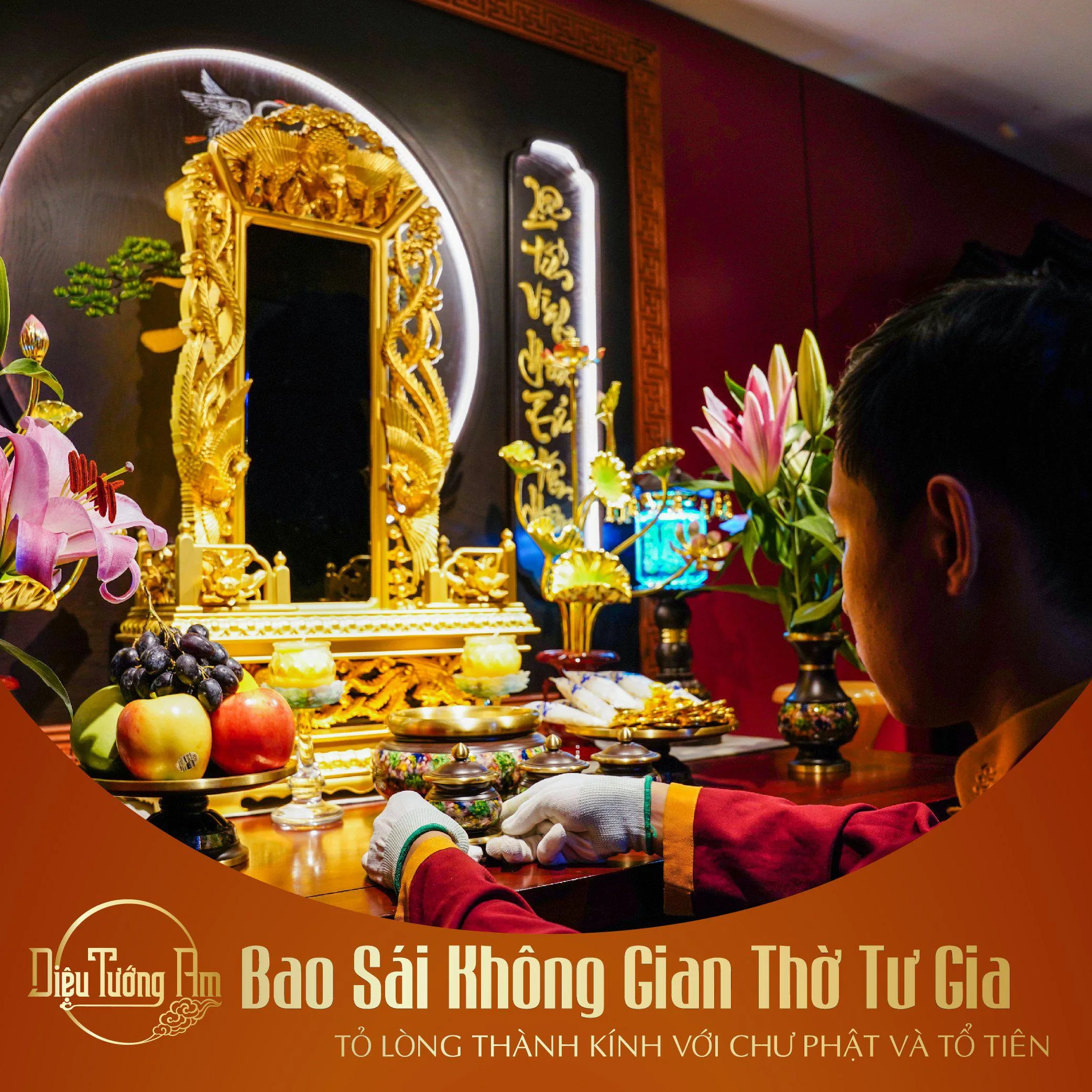
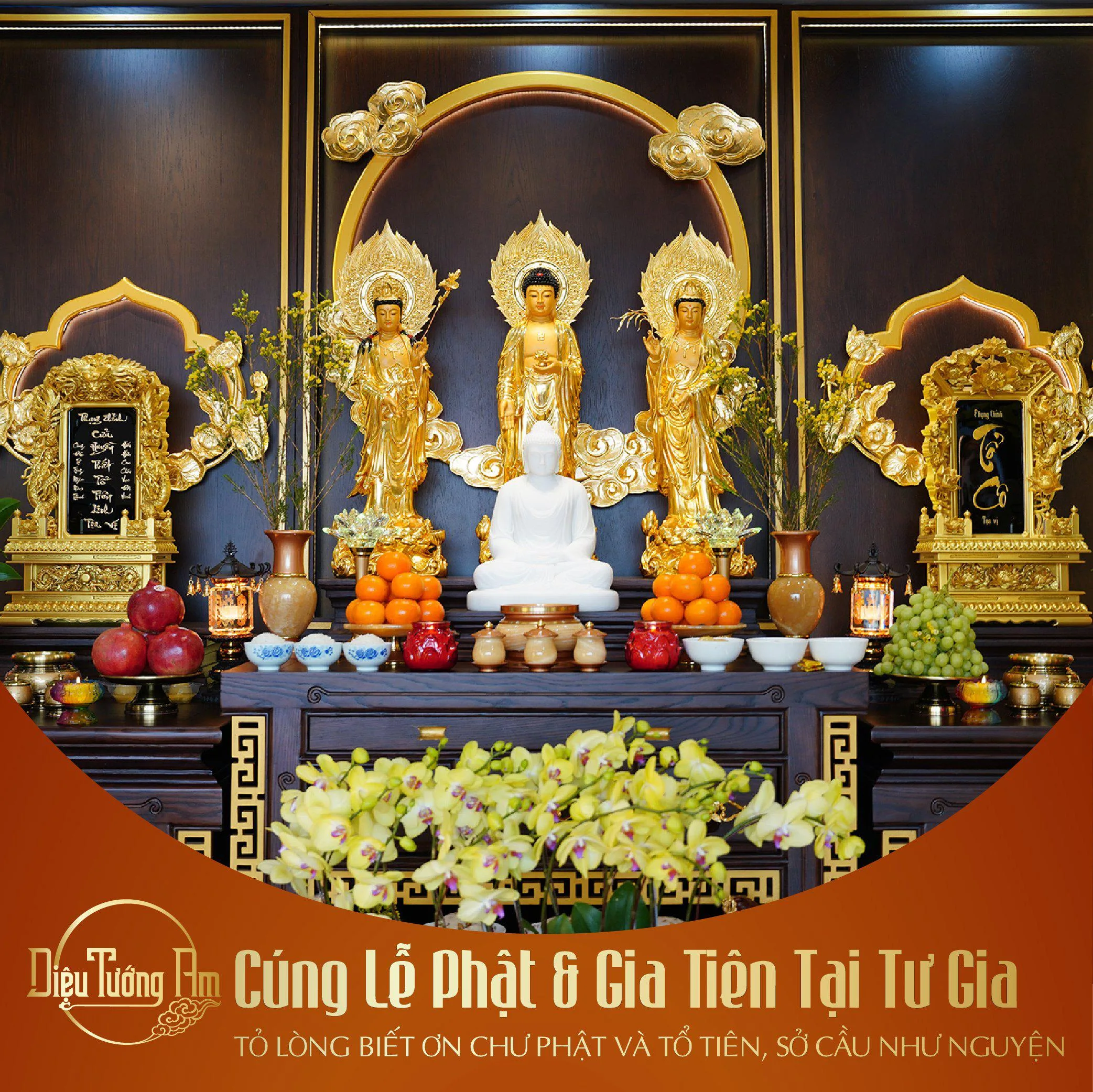
Cleansing the altar and making offerings to the Buddha and ancestors at home to express sincere gratitude toward the Buddhas and forebears, so that one's wishes may be fulfilled
- Offering worship to the Buddha and ancestors at home: On the full moon of the first lunar month, families should prepare two sets of offerings: one for the Buddha and one for the ancestors. The offering to the Buddha should be a pure vegetarian tray including incense, flowers, lamps, candles, and fresh fruit, with sticky rice or sweet vegetarian soup added if desired. The offering to the ancestors should also be a vegetarian meal, avoiding the taking of life to prepare the offering.
In addition, if possible, the household may also prepare an offering tray for the Earth Deity and wandering spirits without a place of refuge. This offering should be placed in the middle of the yard (or in front of the house) and presented in the afternoon or evening. It is customary to set up two tables of different heights — the higher table for the Earth Deity, and the lower table for wandering spirits. It is recommended that vegetarian offerings be used, along with incense, flowers, lamps, candles, sticky rice, and sweet soup.