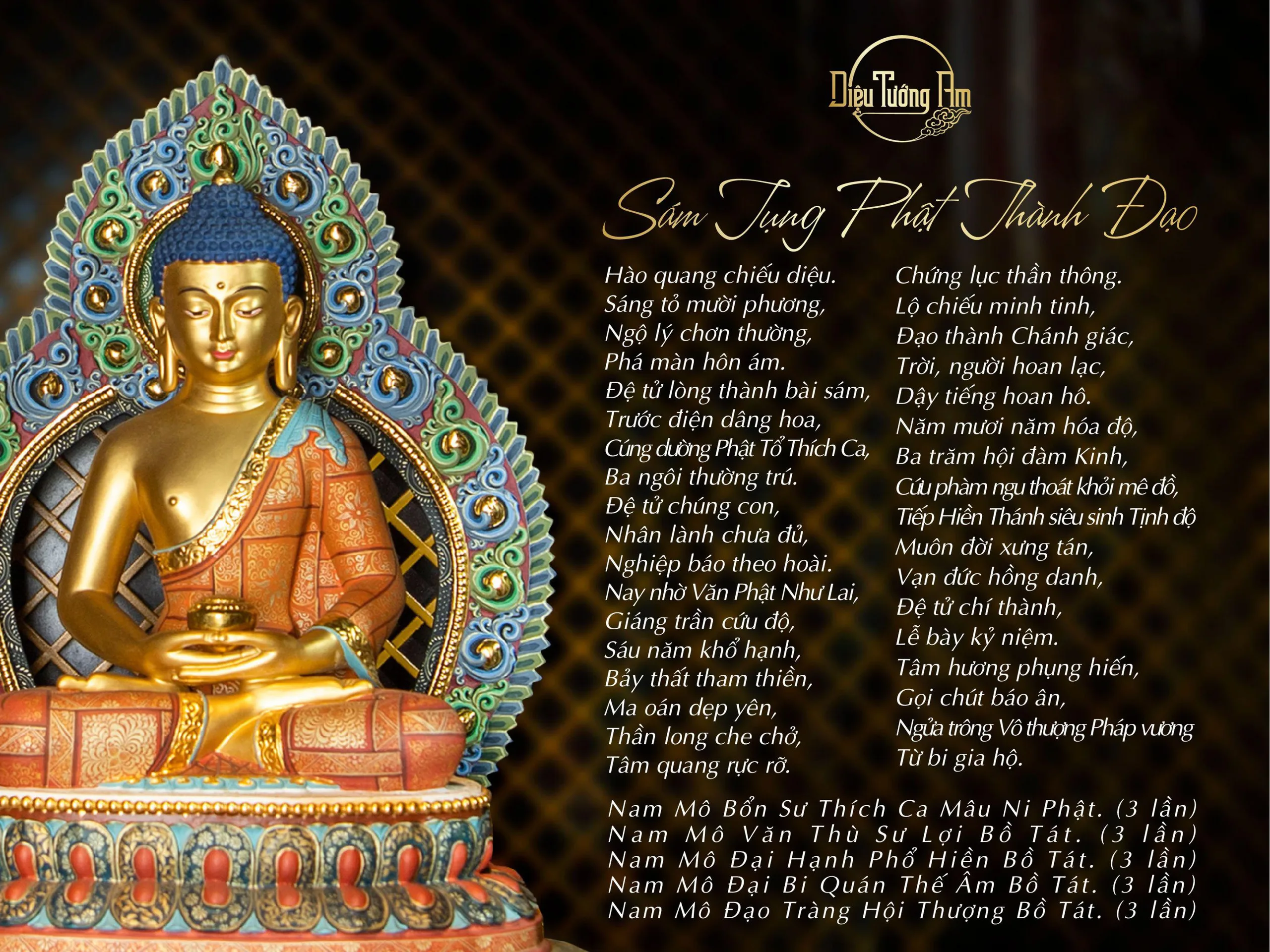

CELEBRATING THE ANNIVERSARY OF SHAKYAMUNI BUDDHA'S ENLIGHTENMENT, 8th DAY OF THE 12th LUNAR MONTH, PL 2566
Celebrating the anniversary of Shakyamuni Buddha's Enlightenment on the 8th day of the 12th lunar month. We respectfully wish all Venerable Monks and Nuns, devoted Buddhists, and valued customers: "MAY WISDOM'S LAMP SHINE ETERNALLY, MAY ALL WISHES BE FULFILLED WITH AUSPICIOUSNESS"
"The Morning Star rose from the horizon's edge
Birth and death ended, all afflictions dissolved
The ten directions of the world rejoiced
Celebrating the Perfectly Enlightened One with a thousand songs of praise"
Celebrating the anniversary of Shakyamuni Buddha's Enlightenment on the 8th day of the 12th lunar month, Diệu Tướng Am respectfully wishes all Venerable Monks and Nuns, devoted Buddhists, and valued customers: "MAY WISDOM'S LAMP SHINE ETERNALLY, MAY ALL WISHES BE FULFILLED WITH AUSPICIOUSNESS"
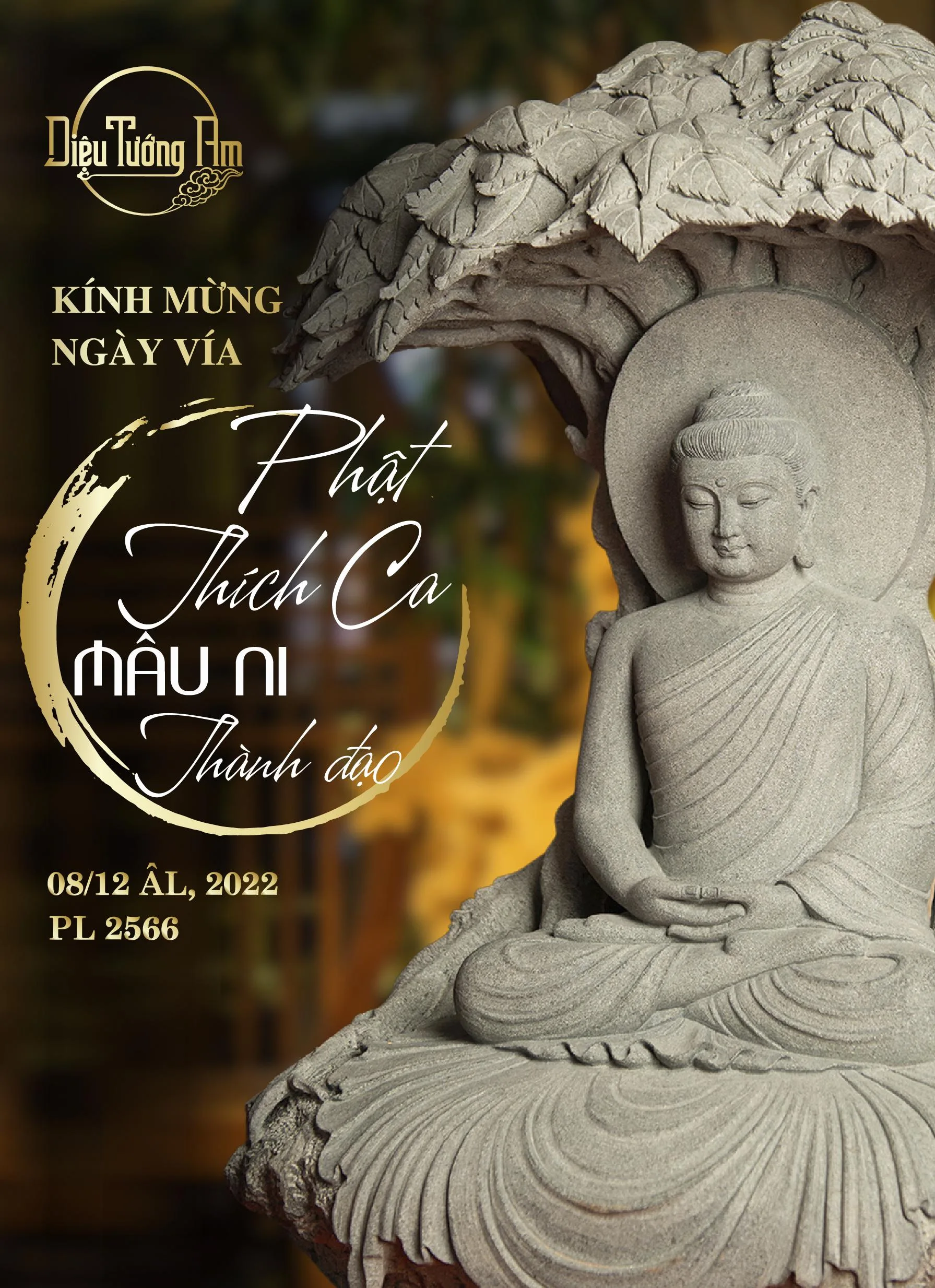
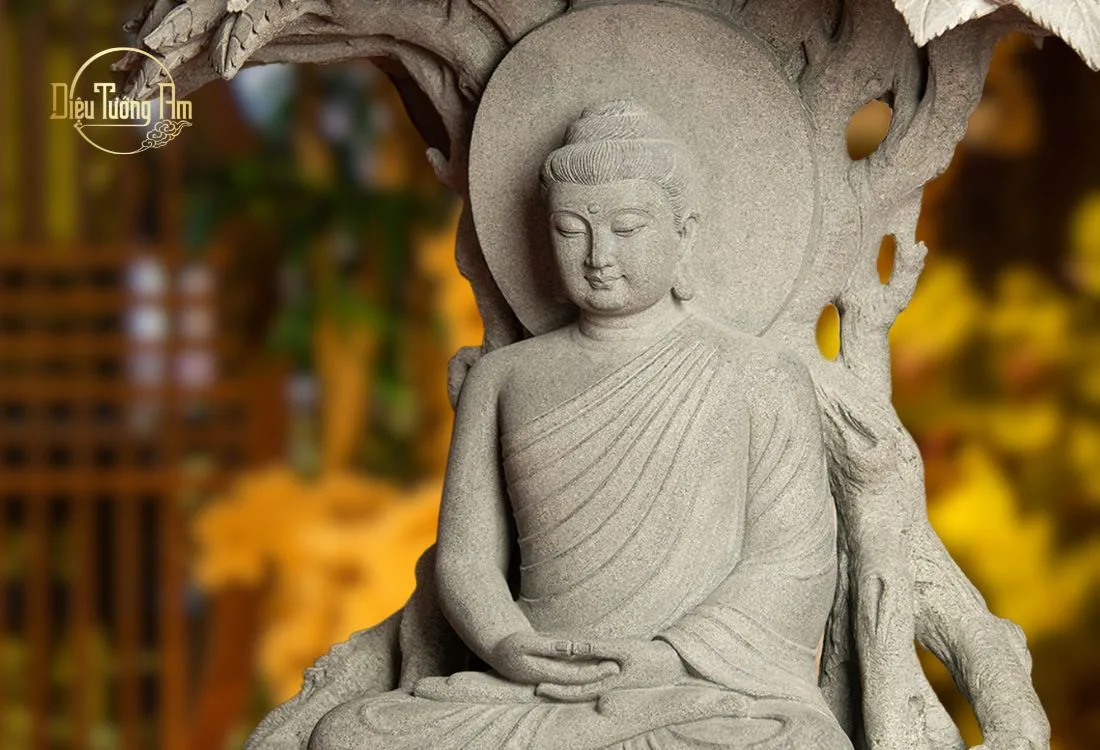
After leaving the palace to renounce worldly life in search of the path, and after many years of seeking teachers and practicing ascetic austerities in the deep forests without attaining enlightenment, the ascetic Gautama came to sit beneath the Bodhi tree at Bodh Gaya, resolved to devote himself entirely to meditation. Through 49 days and nights of unwavering concentration, entering deep meditative absorption and contemplating the true nature of all phenomena, on the 49th night, as the Morning Star rose, He attained Supreme Perfect Enlightenment and became Shakyamuni Buddha. That historic night came to be known as the Night of Enlightenment. After attaining enlightenment, He tirelessly devoted Himself to teaching and liberating sentient beings. He traveled throughout India, delivering the Dharma and guiding countless beings from delusion to awakening. In time, His noble teachings spread across all five continents, bringing immeasurable benefit to humanity and society—both in the past and present, and for all generations yet to come.
The Buddha taught that all sentient beings possess Buddha-nature, and all possess a true, original mind that transcends all duality: "I am a Buddha already accomplished; sentient beings are Buddhas yet to be accomplished." This enlightened nature is equal in all beings, manifesting through the six senses. When the eyes see forms, when the ears hear sounds—without giving rise to discriminating thoughts of beautiful or ugly, good or bad—the enlightened nature is present right there, needing no distant search. We ordinary beings, however, constantly chase after sensory objects, endlessly creating wholesome and unwholesome karma, and thus continue drifting through the six realms of birth and death. When our mind becomes pure, undeceived by external conditions, undisturbed by greed, anger, and delusion, then wisdom awakens, and there is no longer birth, death, or the cycle of rebirth. The purpose of spiritual practice is to transform our own mind—turning an unwholesome mind into a wholesome one—so that we may recognize the ever-present Buddha-mind within ourselves. When we recognize our own Buddha-nature and live fully in accord with that true mind, this is what is called Enlightenment. Therefore, to cultivate the path is to cultivate the mind; to awaken to the path is to awaken the mind; to realize the path is to realize the mind; and to attain enlightenment is likewise to attain it within the mind, nowhere else. Enlightenment means recognizing and forever dwelling in one's own true nature.
More than 25 centuries have passed since the Buddha attained enlightenment beneath the Bodhi tree, yet the story of His search for the path and His spiritual practice remains a profound lesson for all followers of the Buddha. When we first set our heart upon spiritual practice, we need a teacher to guide and direct us, so that we do not lose our way. During the period of diligent practice, we also need the encouragement of teachers and companions to correct our mistakes, so that we are not led astray by worldly temptations. But when it comes to awakening to the path, the practitioner must make the effort alone—one must personally recognize the Buddha-mind within oneself, for no one can do this on another's behalf.
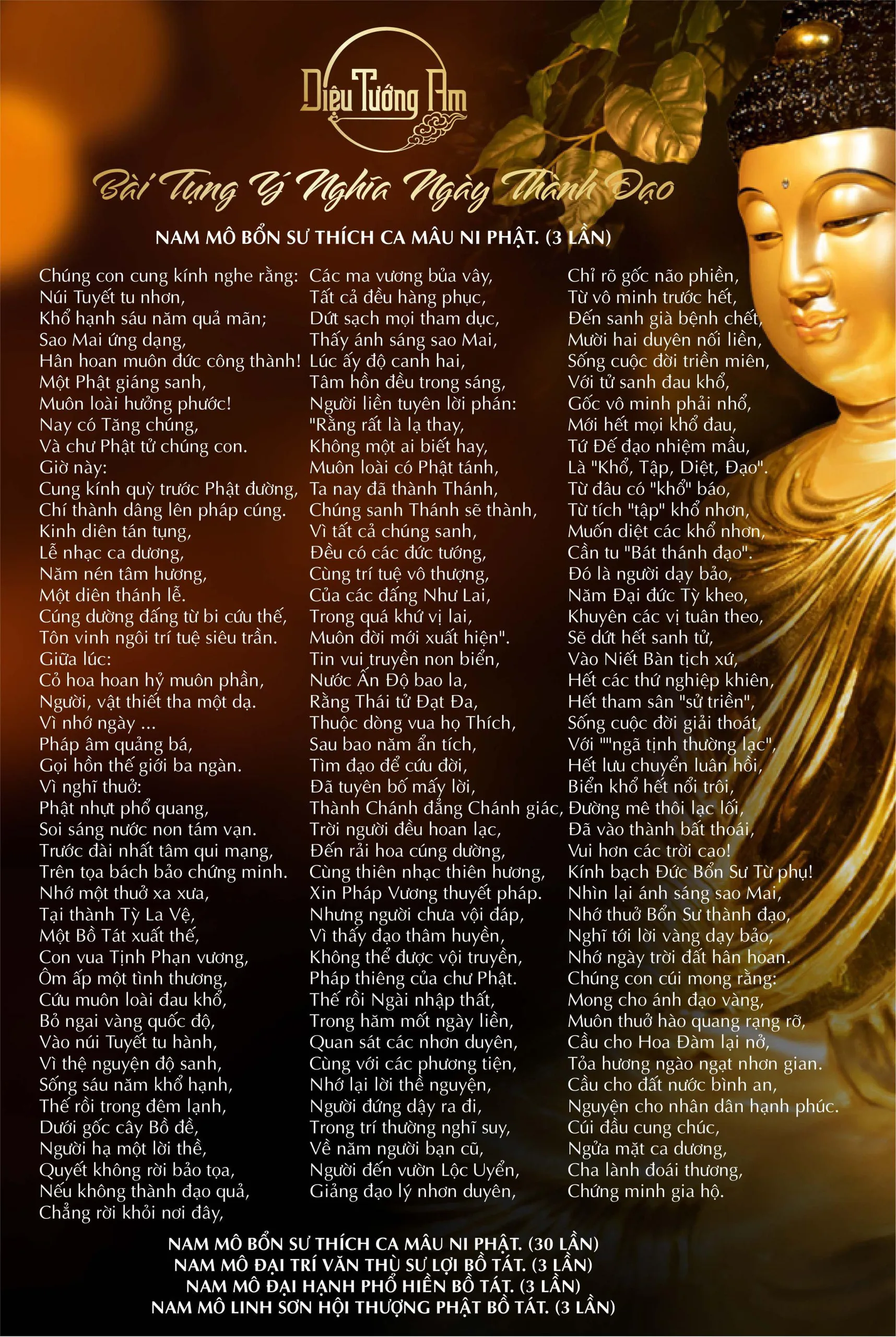
By understanding and believing in our own capacity to become Buddhas, we gain steadfastness on the path of practice. We do not seek the Buddha outside ourselves, nor do we believe in some external power that grants blessings or inflicts misfortune; rather, we trust that our own mind holds the true cause for becoming Buddha. If we advance wholeheartedly along the Right Path without clinging to expectation or desire, then when the right conditions come together, the fruit of enlightenment will naturally ripen.
Shakyamuni Buddha was a historical Buddha—a real being of flesh and blood who was born into this world, who grew up, renounced worldly life to practice the spiritual path, and who attained enlightenment, liberated from the cycle of birth and death and from all the sufferings of existence. He attained enlightenment beneath the Bodhi tree at Bodh Gaya, and for this reason, the Vietnamese refer to that site as Bồ Đề Đạo Tràng (the Bodhi Sanctuary). Today, that Bodhi tree has become a sacred pilgrimage site, drawing Buddhist devotees and admirers of Buddhism from all corners of the world to pay homage and offer prayers.
Here in Vietnam, the Buddhist community observes the 8th day of the 12th lunar month as the anniversary of Shakyamuni Buddha's Enlightenment. On this day, people commonly set their hearts upon spiritual practice, observe precepts and fasting, and devote themselves to diligent practice, so that they may find peace and happiness in the very present moment.